


- Afhalen na 1 uur in een winkel met voorraad
- Gratis thuislevering in België vanaf € 30
- Ruim aanbod met 7 miljoen producten
- Afhalen na 1 uur in een winkel met voorraad
- Gratis thuislevering in België vanaf € 30
- Ruim aanbod met 7 miljoen producten





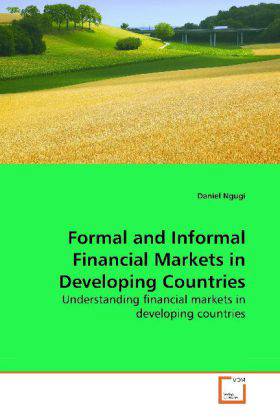
Formal and Informal Financial Markets in Developing Countries
Understanding financial markets in developing countries
Daniel Ngugi
Paperback | Engels
€ 48,45
+ 96 punten
Omschrijving
Developing economies are faced with slow and stagnant growth, the principal cause being application of wrong policies that are not feasible to these economies. Among the wrongly applied policies is financial policy; Financial markets take different forms depending on country s uniqueness. Formal, semi formal and informal financial markets are the main groupings that exist. In developing countries the informal financial markets dominates other forms of finance, why this is the case? Do these institutions facilitate stagnation in developing economies? This book open our eyes and changes our thoughts by analyzing the mentioned forms of financial from the route cause, their operation, and consequences that are attached to them. In addition to that, there are further and detailed cases in some developing economies. The revelation therefore is vital to professionals, economists, development experts, donors, and policy makers to allow them to identify the problems that face these economies individually rather than a general assumptions and wrong policy prescriptions.
Specificaties
Betrokkenen
- Auteur(s):
- Uitgeverij:
Inhoud
- Aantal bladzijden:
- 84
- Taal:
- Engels
Eigenschappen
- Productcode (EAN):
- 9783639179989
- Uitvoering:
- Paperback
- Afmetingen:
- 220


Alleen bij Standaard Boekhandel
+ 96 punten op je klantenkaart van Standaard Boekhandel
Cadeau

AANGERADEN


Beoordelingen
We publiceren alleen reviews die voldoen aan de voorwaarden voor reviews. Bekijk onze voorwaarden voor reviews.