



Bedankt voor het vertrouwen het afgelopen jaar! Om jou te bedanken bieden we GRATIS verzending (in België) aan op alles gedurende de hele maand januari.
- Afhalen na 1 uur in een winkel met voorraad
- Gratis thuislevering in België vanaf € 30
- Ruim aanbod met 7 miljoen producten
Bedankt voor het vertrouwen het afgelopen jaar! Om jou te bedanken bieden we GRATIS verzending (in België) aan op alles gedurende de hele maand januari.
- Afhalen na 1 uur in een winkel met voorraad
- Gratis thuislevering in België vanaf € 30
- Ruim aanbod met 7 miljoen producten





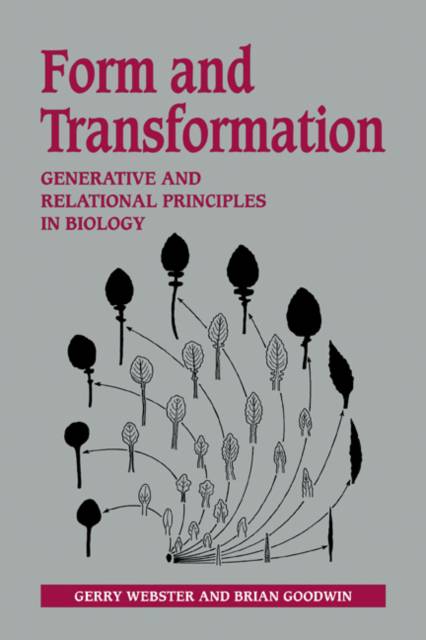
Form and Transformation
Generative and Relational Principles in Biology
Gerry Webster, Brian Goodwin
Paperback | Engels
€ 90,95
+ 181 punten
Omschrijving
Darwin's theory of evolution by natural selection focuses on inheritance and survival without attempting to explain the forms organisms take. The first part of Form and Transformation looks critically at the conceptual structure of Darwinism and describes the limitations of the theory of evolution. The authors argue that a theory of biological form is needed to understand the structure of organisms and their transformations. The second part of the book explores such a theory by portraying organisms as developing and dynamic systems, within which gene action is understandable. The authors present a number of specific examples, including tetrapod limb formation and Drosophila development, to illustrate how these dynamic organisms produce generic forms.
Specificaties
Betrokkenen
- Auteur(s):
- Uitgeverij:
Inhoud
- Aantal bladzijden:
- 302
- Taal:
- Engels
Eigenschappen
- Productcode (EAN):
- 9780521207430
- Verschijningsdatum:
- 28/04/2011
- Uitvoering:
- Paperback
- Formaat:
- Trade paperback (VS)
- Afmetingen:
- 152 mm x 229 mm
- Gewicht:
- 403 g


Alleen bij Standaard Boekhandel
+ 181 punten op je klantenkaart van Standaard Boekhandel
CADEAU


Beoordelingen
We publiceren alleen reviews die voldoen aan de voorwaarden voor reviews. Bekijk onze voorwaarden voor reviews.