


- Afhalen na 1 uur in een winkel met voorraad
- Gratis thuislevering in België vanaf € 30
- Ruim aanbod met 7 miljoen producten
- Afhalen na 1 uur in een winkel met voorraad
- Gratis thuislevering in België vanaf € 30
- Ruim aanbod met 7 miljoen producten





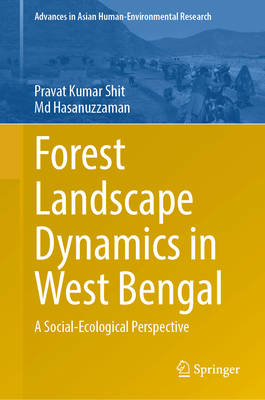
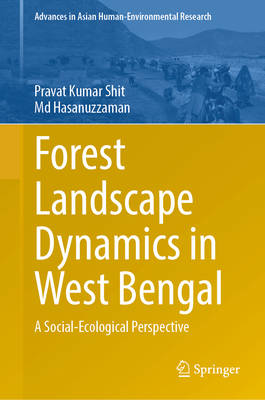
Forest Landscape Dynamics in West Bengal
A Social-Ecological Perspective
Pravat Kumar Shit, MD Hasanuzzaman
€ 162,45
+ 324 punten
Omschrijving
Forests breathe life into landscapes regulating climate, sustaining livelihoods, and binding communities to the land they call home. This book embraces that full complexity, weaving together scientific rigor and human sensitivity to examine West Bengal's forest ecosystems through a genuinely social-ecological lens. At its technical core, the book demonstrates how remote sensing platforms, GIS software, and spatial analysis tools from Landsat and Sentinel imagery to fragmentation modeling and machine learning algorithms are transforming how we measure forest health, estimate biomass and carbon stocks, and track land-use change across time. As West Bengal's forests store roughly 87.5 million tons of carbon and support over three million people, accurately capturing their dynamics is not merely academic it is urgent. Yet the book never loses sight of the human story. Each chapter navigates the layered relationships between forest-dependent communities and the landscapes they inhabit from pre-colonial indigenous stewardship and colonial dispossession to post-independence Joint Forest Management experiments and the still-contested Forest Rights Act. The struggles of tribal communities in Jhargram, the livelihood paradoxes of Binpur-II, the ecological unraveling around Siliguri, and the fragile resilience of the Sundarbans all find careful, grounded treatment here. Across ten thematic chapters, the book moves fluidly between field surveys, satellite-derived evidence, and policy analysis-covering forest fragmentation, biomass estimation, urban encroachment, biodiversity valuation, livelihood dependency, participatory governance, and climate-adaptive management. The Jangal Mahal carbon study, Bankura's ecosystem service decline, and Arabari's JFM legacy each illuminate broader truths about conservation and equity. Moreover, this volume is an essential resource for forest planners, policymakers, NGOs, and researchers, as well as students across geography, environmental science, forestry, botany, wildlife management, and remote sensing disciplines.
Specificaties
Betrokkenen
- Auteur(s):
- Uitgeverij:
Inhoud
- Aantal bladzijden:
- 243
- Taal:
- Engels
- Reeks:
Eigenschappen
- Productcode (EAN):
- 9783032236999
- Verschijningsdatum:
- 14/07/2026
- Uitvoering:
- Hardcover
- Formaat:
- Genaaid
- Afmetingen:
- 155 mm x 235 mm


Alleen bij Standaard Boekhandel
+ 324 punten op je klantenkaart van Standaard Boekhandel
Cadeau

AANGERADEN


Beoordelingen
We publiceren alleen reviews die voldoen aan de voorwaarden voor reviews. Bekijk onze voorwaarden voor reviews.