


- Afhalen na 1 uur in een winkel met voorraad
- Gratis thuislevering in België vanaf € 30
- Ruim aanbod met 7 miljoen producten
- Afhalen na 1 uur in een winkel met voorraad
- Gratis thuislevering in België vanaf € 30
- Ruim aanbod met 7 miljoen producten





€ 36,45
+ 72 punten
Omschrijving
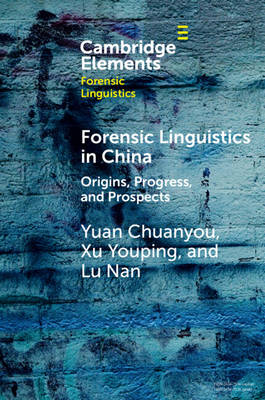
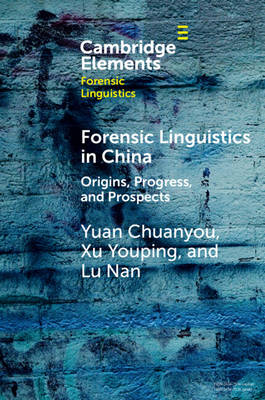
This Element offers a comprehensive examination of forensic linguistics in China. It traces the origins of the field in the 1980s and 1990s, and highlights the progress made in the 2000s, with a focus on the work of influential scholars such as Pan Qingyun, Wang Jie, Du Jinbang, Liao Meizhen, Yuan Chuanyou, and Wang Zhenhua. It discusses the development of Discourse Information Theory, the Principle of Goal, Functional Forensic Discourse Analysis, and Legal Discourse as a Social Process. It also analyses studies on language evidence and explores legal translation. It discusses emerging research areas, including cyberbullying language research, internet court discourse analysis, authorship analysis, expert assistance systems, and speaker identification and evidence of forensic phonetics. This Element provides valuable insights into the growth and potential of forensic linguistics in China, serving as a comprehensive resource for scholars, researchers, and practitioners interested in the intersection of language and law.
Specificaties
Betrokkenen
- Auteur(s):
- Uitgeverij:
Inhoud
- Aantal bladzijden:
- 75
- Taal:
- Engels
- Reeks:
Eigenschappen
- Productcode (EAN):
- 9781009162531
- Verschijningsdatum:
- 2/05/2024
- Uitvoering:
- Paperback
- Formaat:
- Trade paperback (VS)
- Afmetingen:
- 152 mm x 229 mm
- Gewicht:
- 136 g


Alleen bij Standaard Boekhandel
+ 72 punten op je klantenkaart van Standaard Boekhandel
Cadeau

AANGERADEN


Beoordelingen
We publiceren alleen reviews die voldoen aan de voorwaarden voor reviews. Bekijk onze voorwaarden voor reviews.