


- Afhalen na 1 uur in een winkel met voorraad
- Gratis thuislevering in België vanaf € 30
- Ruim aanbod met 7 miljoen producten
- Afhalen na 1 uur in een winkel met voorraad
- Gratis thuislevering in België vanaf € 30
- Ruim aanbod met 7 miljoen producten





€ 68,95
+ 137 punten
Uitvoering
Omschrijving
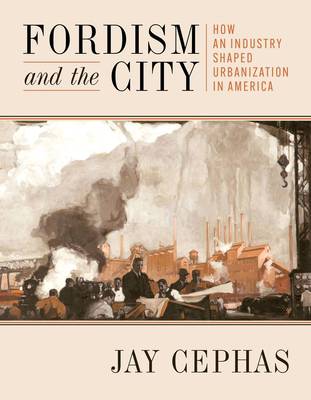
In the early twentieth century, the Ford Motor Company built an industrial empire with massive factory complexes and associated infrastructures. Henry Ford's 1915 plan to decentralize industrial manufacturing relied on moving key technical processes closer to sites of resource extraction while distributing elements of production. In Fordism and the City, Jay Cephas analyzes key infrastructures--from factories and mills to roads, rail lines, and canals--to trace the impact of automated, assembly-line production on the urban and rural landscapes of Michigan. The overwhelming scale of the Ford Motor Company's plant in Dearborn, the idyllic setting of its small village factories throughout the Rouge River corridor, and the remoteness of the company's iron ore mines and hardwood forests in the Upper Peninsula all played an important role. Under the rubric of "the industrial city," Fordism sought to replace conventional urbanism, reconfiguring factory production and then making its practices visible and intelligible to a consuming public through an industrial aesthetic. In doing so, Cephas shows, Fordism functioned as a normalizing force that helped to usher in the new industrial society.
Specificaties
Betrokkenen
- Auteur(s):
- Uitgeverij:
Inhoud
- Aantal bladzijden:
- 384
- Taal:
- Engels
- Reeks:
Eigenschappen
- Productcode (EAN):
- 9780822967958
- Verschijningsdatum:
- 7/04/2026
- Uitvoering:
- Paperback
- Formaat:
- Trade paperback (VS)
- Afmetingen:
- 181 mm x 229 mm
- Gewicht:
- 870 g



Alleen bij Standaard Boekhandel
+ 137 punten op je klantenkaart van Standaard Boekhandel
Cadeau

AANGERADEN


Beoordelingen
We publiceren alleen reviews die voldoen aan de voorwaarden voor reviews. Bekijk onze voorwaarden voor reviews.