


- Afhalen na 1 uur in een winkel met voorraad
- Gratis thuislevering in België vanaf € 30
- Ruim aanbod met 7 miljoen producten
- Afhalen na 1 uur in een winkel met voorraad
- Gratis thuislevering in België vanaf € 30
- Ruim aanbod met 7 miljoen producten





€ 24,95
+ 49 punten
Uitvoering
Omschrijving
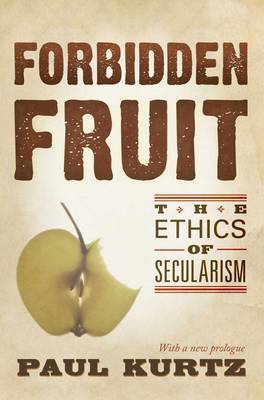
Paul Kurtz, America's leading secular humanist philosopher, affirms that it is possible to live the good life and be morally responsible, without belief in religion. In this original and penetrating book, Kurtz delineates the means by which humanity can transcend the limitations of traditional religious loyalties and achieve a higher stage of ethics.Fundamentalists deny the possibility ofethics without belief in God. Conservatives rail against secularists. Yet belief in God is no guarantee of moral virtue - as the evils committed in the name of religion have vividly shown. Are there secularethical principles and values that are vital for a world in crisis?In this new edition ofForbidden Fruit, Kurtz defends the ethics of secularism and humanism. In order to progress to a maximum level of creative development, he maintains that we must be nourished by the "forbidden fruit" of the knowledge of good and evil, grounding principles and values in autonomous reason. This is the path that leads to the discovery of significant ethical truths that can guide both self-reliant conduct and consideration for the rights of others. By breaking the bonds of theistic illusion, we can summon the courage and wisdom to develop a rational ethic based on a realistic appraisal of nature and an awareness of the centrality of the moral decencies common to all peoples.The ultimate key to the good life, Kurtz writes, is to eat of the fruit of the second tree in the Garden of Eden - the tree of life - discovering for ourselves the manifold potentialities for a bountiful existance.Forbidden Fruitcontains important chapters on ethical excellences for individuals, moral education for children, and thoughts on privacy and human rights, in addition to presenting concrete ethical recommendations as alternatives to the reigning orthodoxies.
Specificaties
Betrokkenen
- Auteur(s):
- Uitgeverij:
Inhoud
- Aantal bladzijden:
- 326
- Taal:
- Engels
Eigenschappen
- Productcode (EAN):
- 9781591026662
- Verschijningsdatum:
- 25/11/2008
- Uitvoering:
- Paperback
- Formaat:
- Trade paperback (VS)
- Afmetingen:
- 153 mm x 226 mm
- Gewicht:
- 430 g


Alleen bij Standaard Boekhandel
+ 49 punten op je klantenkaart van Standaard Boekhandel
AANGERADEN


Beoordelingen
We publiceren alleen reviews die voldoen aan de voorwaarden voor reviews. Bekijk onze voorwaarden voor reviews.