


- Afhalen na 1 uur in een winkel met voorraad
- Gratis thuislevering in België vanaf € 30
- Ruim aanbod met 7 miljoen producten
- Afhalen na 1 uur in een winkel met voorraad
- Gratis thuislevering in België vanaf € 30
- Ruim aanbod met 7 miljoen producten





€ 186,45
+ 372 punten
Omschrijving
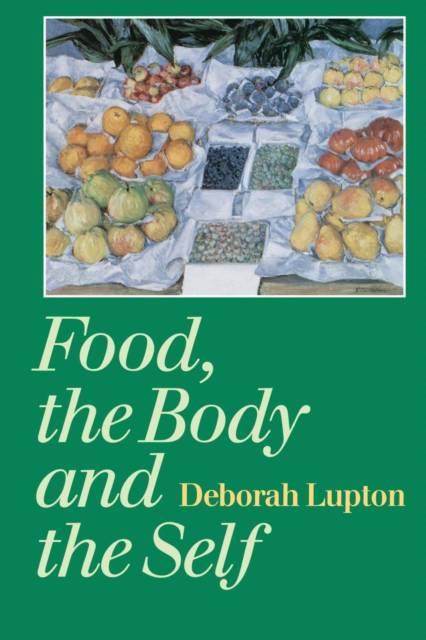
Food and eating practices are at the center of concern in western societies about the body, self-control, health, consumption, and the construction of identity. While we enter the world with the need to eat in order to survive, from the moment of birth the ways in which individuals interact with other people and with cultural artifacts shape their responses to food and eating practices. In Food, Body, and the Self, author Deborah Lupton explores the relationship between food and embodiment and the connection between emotions and subjectivity. In so doing, she includes discussion of the intertwining of food, meaning, and culture in the context of childhood and the family, as well as the social construction of foodstuffs as gendered; food tastes; dislikes and preferences; the dining-out experience; and spirituality and the "civilized" body. She draws on a diverse range of sources, including representations of food and eating in film, literature, advertising, gourmet magazines, new reports and public health literature, and her own empirical research into people′s preferences, memories, experiences, and emotional responses to food. This exciting, wide-ranging, and thought provoking volume will be essential reading for students and academics interested in the sociology of food and everyday life and consumption as well as those in the fields of medical anthropology, cultural studies, and particularly to those engaged in the study of diet and nutrition.
Specificaties
Betrokkenen
- Auteur(s):
- Uitgeverij:
Inhoud
- Aantal bladzijden:
- 192
- Taal:
- Engels
Eigenschappen
- Productcode (EAN):
- 9780803976481
- Verschijningsdatum:
- 25/04/1996
- Uitvoering:
- Paperback
- Formaat:
- Trade paperback (VS)
- Afmetingen:
- 156 mm x 234 mm
- Gewicht:
- 267 g


Alleen bij Standaard Boekhandel
+ 372 punten op je klantenkaart van Standaard Boekhandel
Cadeau

AANGERADEN


Beoordelingen
We publiceren alleen reviews die voldoen aan de voorwaarden voor reviews. Bekijk onze voorwaarden voor reviews.