


- Afhalen na 1 uur in een winkel met voorraad
- Gratis thuislevering in België vanaf € 30
- Ruim aanbod met 7 miljoen producten
- Afhalen na 1 uur in een winkel met voorraad
- Gratis thuislevering in België vanaf € 30
- Ruim aanbod met 7 miljoen producten





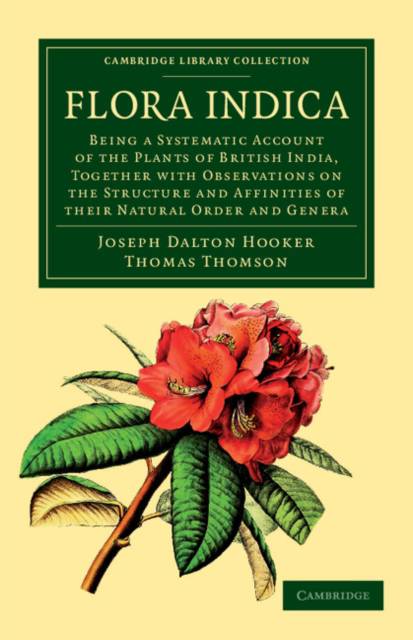
Flora Indica
Being a Systematic Account of the Plants of British India, Together with Observations on the Structure and Affinities of Their Natural Order and Genera
Joseph Dalton Hooker, Thomas Thomson
€ 127,45
+ 254 punten
Omschrijving
Sir Joseph Hooker (1817-1911) was one of the greatest British botanists and explorers of the nineteenth century. He succeeded his father, Sir William Jackson Hooker, as Director of the Royal Botanic Gardens, Kew, and was a close friend and supporter of Charles Darwin. His journey to the Himalayas and India, during which he collected some 7,000 species, was undertaken between 1847 and 1851 to increase the Kew collections; his account of the expedition (also reissued in this series) was dedicated to Darwin. In 1855 he published Flora Indica with his fellow-traveller Thomas Thomson, who became Superintendent of the East India Company's Botanic Garden at Calcutta. Lack of support from the Company meant that only the first volume of a projected series was published. However, the introductory essay on the geographical relations of India's flora is considered to be one of Hooker's most important statements on biogeographical issues.
Specificaties
Betrokkenen
- Auteur(s):
- Uitgeverij:
Inhoud
- Aantal bladzijden:
- 592
- Taal:
- Engels
- Reeks:
Eigenschappen
- Productcode (EAN):
- 9781108037495
- Verschijningsdatum:
- 8/12/2011
- Uitvoering:
- Paperback
- Formaat:
- Trade paperback (VS)
- Afmetingen:
- 140 mm x 216 mm
- Gewicht:
- 743 g


Alleen bij Standaard Boekhandel
+ 254 punten op je klantenkaart van Standaard Boekhandel
Cadeau

AANGERADEN


Beoordelingen
We publiceren alleen reviews die voldoen aan de voorwaarden voor reviews. Bekijk onze voorwaarden voor reviews.