


- Afhalen na 1 uur in een winkel met voorraad
- Gratis thuislevering in België vanaf € 30
- Ruim aanbod met 7 miljoen producten
- Afhalen na 1 uur in een winkel met voorraad
- Gratis thuislevering in België vanaf € 30
- Ruim aanbod met 7 miljoen producten





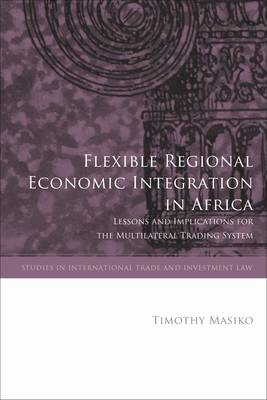
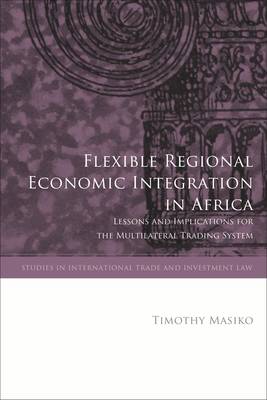
Flexible Regional Economic Integration in Africa
Lessons and Implications for the Multilateral Trading System
Timothy Masiko
€ 220,45
+ 440 punten
Uitvoering
Omschrijving
This book examines the relationship between flexible regional economic integration in the East African Community (EAC), through its application of variable geometry, and the establishment of the African Continental Free Trade Area (AfCFTA) as a continent-wide form of integration. It uses a historical, political, legal and economic analysis of the processes that led to the adoption of flexible regional integration in Africa, with particular regard to the EAC. This takes place in the inescapable context of pan-Africanism, showing how regional integration efforts in Africa are based on pan-Africanist ideals, and how an evolution of these ideals has led to an evolution in the goals of integration. With growing awareness of the weaknesses and impracticality of consensus-based decision-making on a global level, it makes the case for the pursuit of flexibility in multilateral trade, drawing lessons from the experience of the AfCFTA and blocs in other regions.
This book is a historical evaluation of regional economic integration efforts in Africa and it follows the path of attempts to integrate the economies on the continent from colonial times to the birth of the AfCFTA. While it is a study in law, it relies heavily on politics, economics and history to weave together a more complete theory of economic integration based on the African experience. Flexible Regional Economic Integration in Africa was awarded the 2020 SIEL-Hart Prize in International Economic Law.Specificaties
Betrokkenen
- Auteur(s):
- Uitgeverij:
Inhoud
- Aantal bladzijden:
- 272
- Taal:
- Engels
- Reeks:
Eigenschappen
- Productcode (EAN):
- 9781509944965
- Verschijningsdatum:
- 21/04/2022
- Uitvoering:
- Hardcover
- Formaat:
- Genaaid
- Afmetingen:
- 156 mm x 234 mm
- Gewicht:
- 557 g


Alleen bij Standaard Boekhandel
+ 440 punten op je klantenkaart van Standaard Boekhandel

Beoordelingen
We publiceren alleen reviews die voldoen aan de voorwaarden voor reviews. Bekijk onze voorwaarden voor reviews.