


- Afhalen na 1 uur in een winkel met voorraad
- Gratis thuislevering in België vanaf € 30
- Ruim aanbod met 7 miljoen producten
- Afhalen na 1 uur in een winkel met voorraad
- Gratis thuislevering in België vanaf € 30
- Ruim aanbod met 7 miljoen producten





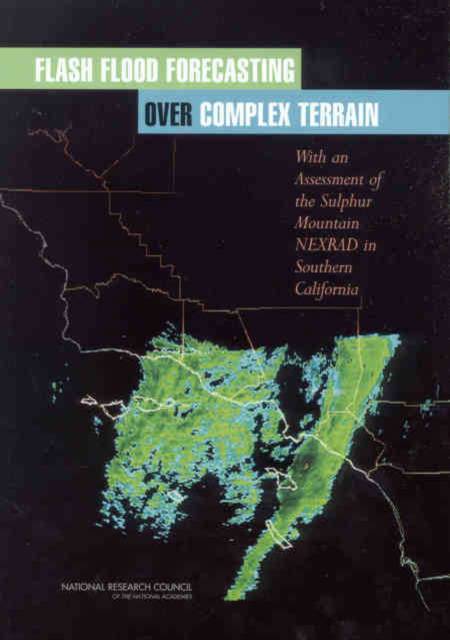
Flash Flood Forecasting Over Complex Terrain
With an Assessment of the Sulphur Mountain Nexrad in Southern California
National Research Council, Division on Earth and Life Studies, Board on Atmospheric Sciences and Climate, Committee to Assess Nexrad Flash Flood Forecasting Capabilities
€ 97,95
+ 195 punten
Eenvoudig bestellen
Veilig betalen


Gratis thuislevering vanaf € 30 (via bpost)
Gratis levering in je Standaard Boekhandel
Omschrijving
The nation's network of more than 130 Next Generation Radars (NEXRADs) is used to detect wind and precipitation to help National Weather Service forecasters monitor and predict flash floods and other storms. This book assesses the performance of the Sulphur Mountain NEXRAD in Southern California, which has been scrutinized for its ability to detect precipitation in the atmosphere below 6000 feet. The book finds that the Sulphur Mountain NEXRAD provides crucial coverage of the lower atmosphere and is appropriately situated to assist the Los Angeles-Oxnard National Weather Service Forecast Office in successfully forecasting and warning of flash floods. The book concludes that, in general, NEXRAD technology is effective in mountainous terrain but can be improved.
Specificaties
Betrokkenen
- Auteur(s):
- Uitgeverij:
Inhoud
- Aantal bladzijden:
- 206
- Taal:
- Engels
- Reeks:
Eigenschappen
- Productcode (EAN):
- 9780309093163
- Verschijningsdatum:
- 28/01/2005
- Uitvoering:
- Paperback
- Formaat:
- Trade paperback (VS)
- Afmetingen:
- 178 mm x 254 mm
- Gewicht:
- 522 g


Alleen bij Standaard Boekhandel
+ 195 punten op je klantenkaart van Standaard Boekhandel
CADEAU

AANGERADEN


Beoordelingen
We publiceren alleen reviews die voldoen aan de voorwaarden voor reviews. Bekijk onze voorwaarden voor reviews.