


- Afhalen na 1 uur in een winkel met voorraad
- Gratis thuislevering in België vanaf € 30
- Ruim aanbod met 7 miljoen producten
- Afhalen na 1 uur in een winkel met voorraad
- Gratis thuislevering in België vanaf € 30
- Ruim aanbod met 7 miljoen producten





€ 123,95
+ 247 punten
Omschrijving
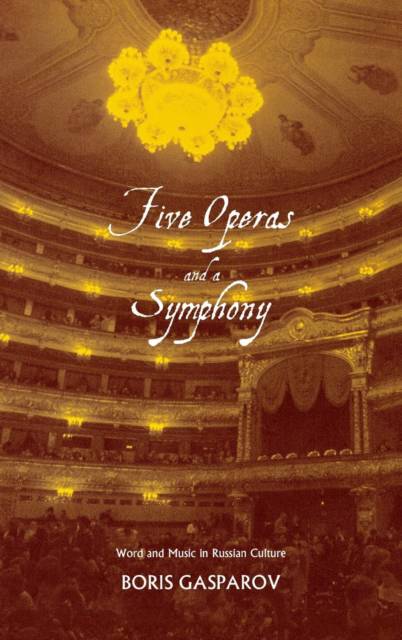
In this eagerly anticipated book, Boris Gasparov gazes through the lens of music to find an unusual perspective on Russian cultural and literary history. He discusses six major works of Russian music from the nineteenth and twentieth centuries, showing the interplay of musical texts with their literary and historical sources within the ideological and cultural contexts of their times. Each musical work becomes a tableau representing a moment in Russian history, and together the works form a coherent story of ideological and aesthetic trends as they evolved in Russia from the time of Pushkin to the rise of totalitarianism in the 1930s. Gasparov discusses Glinka's Ruslan and Ludmilla (1842), Mussorgsky's Boris Godunov (1871) and Khovanshchina (1881), Tchaikovsky's Eugene Onegin (1878) and The Queen of Spades (1890), and Shostakovich's Fourth Symphony (1934). Offering new interpretations to enhance our understanding and appreciation of these important works, Gasparov also demonstrates how Russian music and cultural history illuminate one another.
Specificaties
Betrokkenen
- Auteur(s):
- Uitgeverij:
Inhoud
- Aantal bladzijden:
- 304
- Taal:
- Engels
- Reeks:
Eigenschappen
- Productcode (EAN):
- 9780300106503
- Verschijningsdatum:
- 1/10/2005
- Uitvoering:
- Hardcover
- Formaat:
- Genaaid
- Afmetingen:
- 165 mm x 241 mm
- Gewicht:
- 576 g


Alleen bij Standaard Boekhandel
+ 247 punten op je klantenkaart van Standaard Boekhandel
Cadeau

AANGERADEN


Beoordelingen
We publiceren alleen reviews die voldoen aan de voorwaarden voor reviews. Bekijk onze voorwaarden voor reviews.