


- Afhalen na 1 uur in een winkel met voorraad
- Gratis thuislevering in België vanaf € 30
- Ruim aanbod met 7 miljoen producten
- Afhalen na 1 uur in een winkel met voorraad
- Gratis thuislevering in België vanaf € 30
- Ruim aanbod met 7 miljoen producten





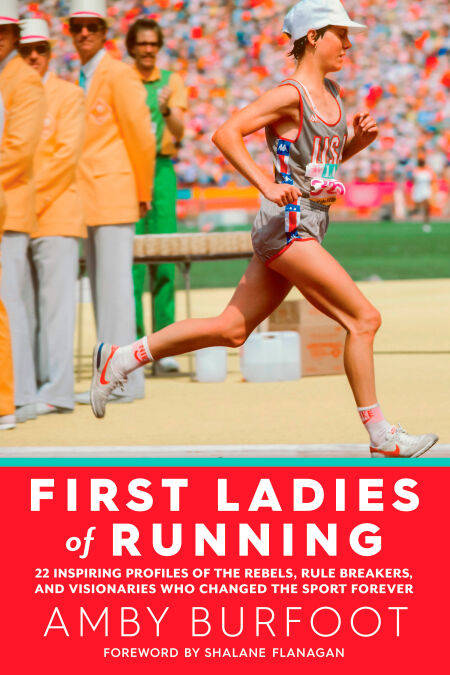
First Ladies of Running E-BOOK
22 Inspiring Profiles of the Rebels, Rule Breakers, and Visionaries Who Changed the Sport Forever
Amby Burfoot
E-book | Engels
€ 5,75
+ 5 punten
Uitvoering
Omschrijving
Today, millions of women and girls around the world enjoy running and entering races. It wasn’t always so:
• In 1961, when Julia Chase edged to the start of a Connecticut 5-miler, officials tried to push her off the road.
• At the 1966 Boston Marathon, Roberta Gibb hid behind a forsythia bush, worried that police might arrest her.
• The next year at Boston, Kathrine Switzer was assaulted mid-race by a furious race organizer.
• In the mid-60s, Indianapolis high schooler Cheryl Bridges was told not to run anywhere near the boys’ track team because she might “distract” them.
• When Charlotte Lettis signed up for the University of Massachusetts cross-country team in the fall of 1971, she was told to use the men’s locker room.
• A few years later in coastal Maine, young Joan Benoit would stop her workouts to pretend she was picking roadside flowers, embarrassed that her neighbors might spot her running.
First Ladies of Running tells the inspiring stories of these and other fiercely independent runners who refused to give up despite the cultural and sports barriers they faced. Legends such as Doris Brown, Francie Larrieu, Mary Decker, Jackie Hansen, Miki Gorman, and Grete Waitz are chronicled by Runner’s World editor Amby Burfoot. Burfoot even runs the 1994 Marine Corps Marathon with Oprah Winfrey, whose successful finish opened the floodgates for other women runners. First Ladies of Running is a beautiful and long-overdue tribute to the pioneers of women’s running, and a gift of empowerment for female runners everywhere.
• In 1961, when Julia Chase edged to the start of a Connecticut 5-miler, officials tried to push her off the road.
• At the 1966 Boston Marathon, Roberta Gibb hid behind a forsythia bush, worried that police might arrest her.
• The next year at Boston, Kathrine Switzer was assaulted mid-race by a furious race organizer.
• In the mid-60s, Indianapolis high schooler Cheryl Bridges was told not to run anywhere near the boys’ track team because she might “distract” them.
• When Charlotte Lettis signed up for the University of Massachusetts cross-country team in the fall of 1971, she was told to use the men’s locker room.
• A few years later in coastal Maine, young Joan Benoit would stop her workouts to pretend she was picking roadside flowers, embarrassed that her neighbors might spot her running.
First Ladies of Running tells the inspiring stories of these and other fiercely independent runners who refused to give up despite the cultural and sports barriers they faced. Legends such as Doris Brown, Francie Larrieu, Mary Decker, Jackie Hansen, Miki Gorman, and Grete Waitz are chronicled by Runner’s World editor Amby Burfoot. Burfoot even runs the 1994 Marine Corps Marathon with Oprah Winfrey, whose successful finish opened the floodgates for other women runners. First Ladies of Running is a beautiful and long-overdue tribute to the pioneers of women’s running, and a gift of empowerment for female runners everywhere.
Specificaties
Betrokkenen
- Auteur(s):
- Uitgeverij:
Inhoud
- Aantal bladzijden:
- 288
- Taal:
- Engels
Eigenschappen
- Productcode (EAN):
- 9781609615659
- Verschijningsdatum:
- 4/04/2016
- Uitvoering:
- E-book
- Beveiligd met:
- Adobe DRM
- Formaat:
- ePub


Alleen bij Standaard Boekhandel
+ 5 punten op je klantenkaart van Standaard Boekhandel
AANGERADEN


Beoordelingen
We publiceren alleen reviews die voldoen aan de voorwaarden voor reviews. Bekijk onze voorwaarden voor reviews.