


- Afhalen na 1 uur in een winkel met voorraad
- Gratis thuislevering in België vanaf € 30
- Ruim aanbod met 7 miljoen producten
- Afhalen na 1 uur in een winkel met voorraad
- Gratis thuislevering in België vanaf € 30
- Ruim aanbod met 7 miljoen producten





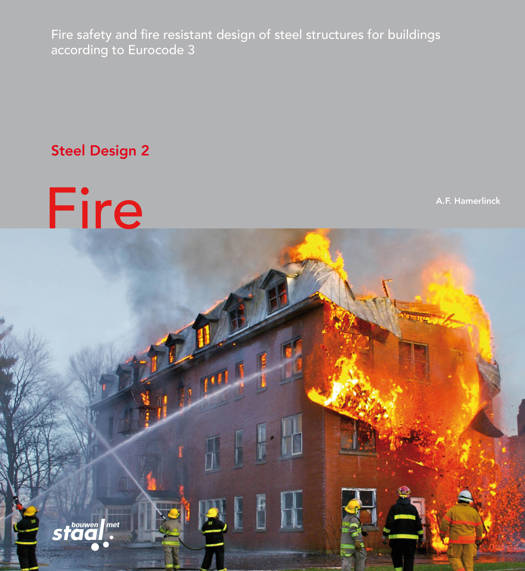
Fire
Fire safety and fire resistant design of steel structures for buildings according to Eurocode 3
A.F. Hamerlinck
€ 72,00
+ 144 punten
Omschrijving
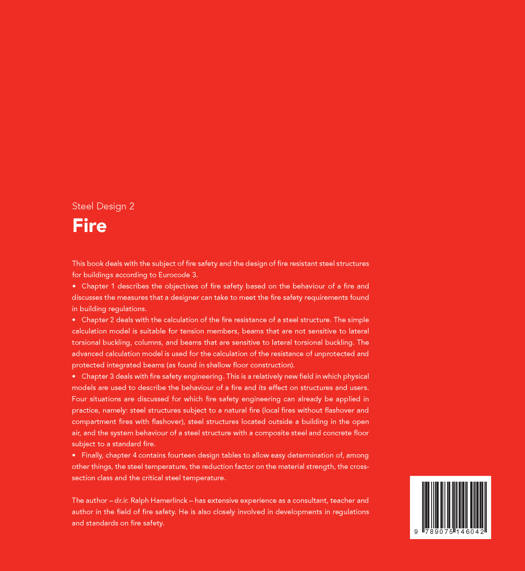
This book deals with the subject of fire safety and the design of fire resistant steel structures for buildings according to Eurocode 3.
• Chapter 1 describes the objectives of fire safety based on the behaviour of a fire and discusses the measures that a designer can take to meet the fire safety requirements found in building regulations.
• Chapter 2 deals with the calculation of the fire resistance of a steel structure. The simple calculation model is suitable for tension members, beams that are not sensitive to lateral torsional buckling, columns, and beams that are sensitive to lateral torsional buckling. The advanced calculation model is used for the calculation of the resistance of unprotected and protected integrated beams (as found in shallow floor construction).
• Chapter 3 deals with fire safety engineering. This is a relatively new field in which physical models are used to describe the behaviour of a fire and its effect on structures and users. Four situations are discussed for which fire safety engineering can already be applied in practice, namely: steel structures subject to a natural fire (local fires without flashover and compartment fires with flashover), steel structures located outside a building in the open air, and the system behaviour of a steel structure with a composite steel and concrete floor subject to a standard fire.
• Finally, chapter 4 contains fourteen design tables to allow easy determination of, among other things, the steel temperature, the reduction factor on the material strength, the cross-section class and the critical steel temperature.
The author – dr.ir. Ralph Hamerlinck – has extensive experience as a consultant, teacher and author in the field of fire safety. He is also closely involved in developments in regulations and standards on fire safety.
• Chapter 1 describes the objectives of fire safety based on the behaviour of a fire and discusses the measures that a designer can take to meet the fire safety requirements found in building regulations.
• Chapter 2 deals with the calculation of the fire resistance of a steel structure. The simple calculation model is suitable for tension members, beams that are not sensitive to lateral torsional buckling, columns, and beams that are sensitive to lateral torsional buckling. The advanced calculation model is used for the calculation of the resistance of unprotected and protected integrated beams (as found in shallow floor construction).
• Chapter 3 deals with fire safety engineering. This is a relatively new field in which physical models are used to describe the behaviour of a fire and its effect on structures and users. Four situations are discussed for which fire safety engineering can already be applied in practice, namely: steel structures subject to a natural fire (local fires without flashover and compartment fires with flashover), steel structures located outside a building in the open air, and the system behaviour of a steel structure with a composite steel and concrete floor subject to a standard fire.
• Finally, chapter 4 contains fourteen design tables to allow easy determination of, among other things, the steel temperature, the reduction factor on the material strength, the cross-section class and the critical steel temperature.
The author – dr.ir. Ralph Hamerlinck – has extensive experience as a consultant, teacher and author in the field of fire safety. He is also closely involved in developments in regulations and standards on fire safety.
Specificaties
Betrokkenen
- Auteur(s):
- Uitgeverij:
Inhoud
- Aantal bladzijden:
- 164
- Taal:
- Engels
- Reeks:
- Reeksnummer:
- nr. 2
Eigenschappen
- Productcode (EAN):
- 9789075146042
- Verschijningsdatum:
- 26/05/2021
- Uitvoering:
- Hardcover
- Afmetingen:
- 236 mm x 258 mm
- Gewicht:
- 849 g


Alleen bij Standaard Boekhandel
+ 144 punten op je klantenkaart van Standaard Boekhandel
AANGERADEN


Beoordelingen
We publiceren alleen reviews die voldoen aan de voorwaarden voor reviews. Bekijk onze voorwaarden voor reviews.