


- Afhalen na 1 uur in een winkel met voorraad
- Gratis thuislevering in België vanaf € 30
- Ruim aanbod met 7 miljoen producten
- Afhalen na 1 uur in een winkel met voorraad
- Gratis thuislevering in België vanaf € 30
- Ruim aanbod met 7 miljoen producten





Omschrijving
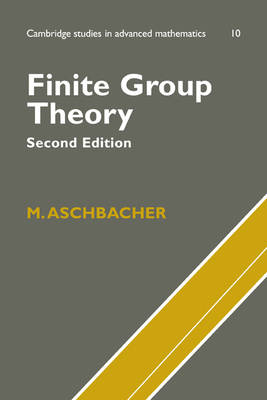
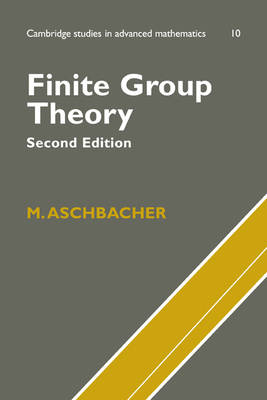
This second edition develops the foundations of finite group theory. For students already exposed to a first course in algebra, it serves as a text for a course on finite groups. For the reader with some mathematical sophistication but limited knowledge of finite group theory, the book supplies the basic background necessary to begin to read journal articles in the field. It also provides the specialist in finite group theory with a reference on the foundations of the subject. Unifying themes include the Classification Theorem and the classical linear groups. Lie theory appears in chapters on Coxeter groups, root systems, buildings, and Tits systems. This second edition has been considerably improved with a completely rewritten Chapter 15 considering the 2-Signalizer Functor Theorem, and the addition of an appendix containing solutions to exercises.
Specificaties
Betrokkenen
- Auteur(s):
- Uitgeverij:
Inhoud
- Aantal bladzijden:
- 320
- Taal:
- Engels
- Reeks:
- Reeksnummer:
- nr. 10
Eigenschappen
- Productcode (EAN):
- 9780521781459
- Verschijningsdatum:
- 3/07/2000
- Uitvoering:
- Hardcover
- Formaat:
- Genaaid
- Afmetingen:
- 152 mm x 229 mm
- Gewicht:
- 639 g


Alleen bij Standaard Boekhandel
+ 423 punten op je klantenkaart van Standaard Boekhandel
AANGERADEN


Beoordelingen
We publiceren alleen reviews die voldoen aan de voorwaarden voor reviews. Bekijk onze voorwaarden voor reviews.