


- Afhalen na 1 uur in een winkel met voorraad
- Gratis thuislevering in België vanaf € 30
- Ruim aanbod met 7 miljoen producten
- Afhalen na 1 uur in een winkel met voorraad
- Gratis thuislevering in België vanaf € 30
- Ruim aanbod met 7 miljoen producten





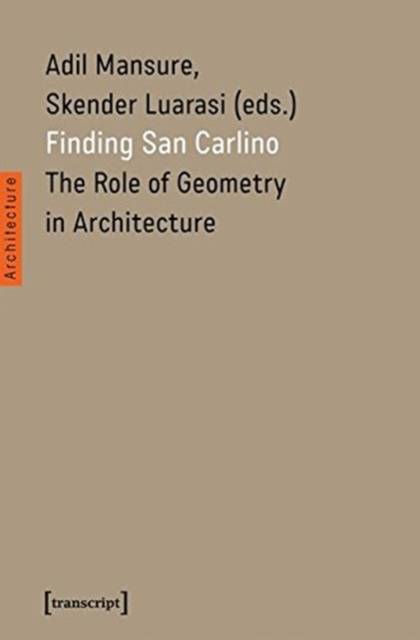
Finding San Carlino
The Role of Geometry in Architecture
€ 36,45
+ 72 punten
Omschrijving
Francesco Borromini's San Carlo alle Quattro Fontane (San Carlino) is a curious artefact that continues to inspire hypotheses and geometric analyses attempting to explain its form, meaning, and symbolism. These analyses intend to reconstruct an ideality of the church through tracing its design evolution. However, several parts and aspects of the church correspond neither with these reconstructions nor with Borromini's drawings. These incongruities bring into question the very role of geometry in architecture.
What, then, is San Carlino's exemplary value, and why does it continue to evoke a desire for interpretation today? Is its perceived lack in geometrical construction due to the approach of interpretations that focus on San Carlino's geometry, or is this lack inherent in the building? This book offers nuanced analytical frameworks cognizant of our post-mechanical age of (re)production and roots the church's origin in Borromini's baroque.
What, then, is San Carlino's exemplary value, and why does it continue to evoke a desire for interpretation today? Is its perceived lack in geometrical construction due to the approach of interpretations that focus on San Carlino's geometry, or is this lack inherent in the building? This book offers nuanced analytical frameworks cognizant of our post-mechanical age of (re)production and roots the church's origin in Borromini's baroque.
Specificaties
Betrokkenen
- Uitgeverij:
Inhoud
- Aantal bladzijden:
- 170
- Taal:
- Engels
- Reeks:
- Reeksnummer:
- nr. 44
Eigenschappen
- Productcode (EAN):
- 9783837641547
- Verschijningsdatum:
- 27/11/2018
- Uitvoering:
- Paperback
- Afmetingen:
- 148 mm x 225 mm
- Gewicht:
- 273 g

Alleen bij Standaard Boekhandel
+ 72 punten op je klantenkaart van Standaard Boekhandel
Cadeau

AANGERADEN


Beoordelingen
We publiceren alleen reviews die voldoen aan de voorwaarden voor reviews. Bekijk onze voorwaarden voor reviews.