


- Afhalen na 1 uur in een winkel met voorraad
- Gratis thuislevering in België vanaf € 30
- Ruim aanbod met 7 miljoen producten
- Afhalen na 1 uur in een winkel met voorraad
- Gratis thuislevering in België vanaf € 30
- Ruim aanbod met 7 miljoen producten





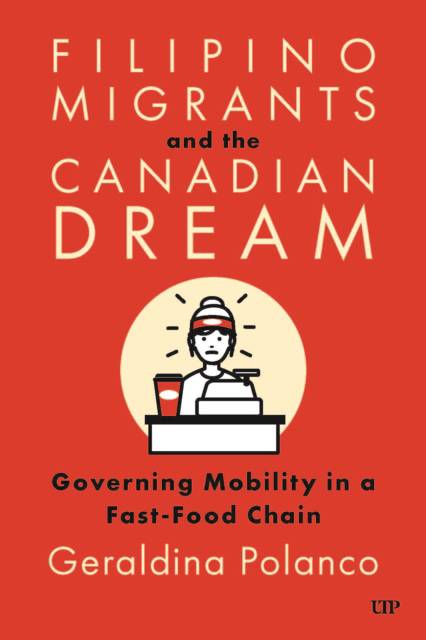
Filipino Migrants and the Canadian Dream
Governing Mobility in a Fast-Food Chain
University of Toronto Press, Geraldina Polanco
€ 45,95
+ 91 punten
Omschrijving
Filipino Migrants and the Canadian Dream explores the power of the Canadian dream and how this social imaginary is leveraged by various institutional actors across transnational networks to govern mobility and work in the bottom tiers of a globalized labour market. The book focuses specifically on the migration management and governance of skilled Filipino workers recruited for entry-level fast-food positions in Western Canada. Drawing on ethnographic fieldwork conducted in both Western Canada and the Philippines, the book examines how migration institutions and social actors shape migrant aspirations, constructing cultural narratives of nations that influence people's decisions to migrate.
Using Tim Hortons - a beloved Canadian institution - as a case study, the book illustrates how the Canadian dream and its implied promises are harnessed (inadvertently) at different stages of the migration process to propel mobility or fulfil profit-driven goals. The analysis highlights how a range of actors - states, corporations, employers, recruiters, diaspora communities, and migrants themselves - contribute to the creation and circulation of these dreams. Ultimately, the book demonstrates that the social imaginary must be unpacked across global circuits, spaces, and scales to fully understand how temporary labour programs operate within the context of a neoliberal economy.
Using Tim Hortons - a beloved Canadian institution - as a case study, the book illustrates how the Canadian dream and its implied promises are harnessed (inadvertently) at different stages of the migration process to propel mobility or fulfil profit-driven goals. The analysis highlights how a range of actors - states, corporations, employers, recruiters, diaspora communities, and migrants themselves - contribute to the creation and circulation of these dreams. Ultimately, the book demonstrates that the social imaginary must be unpacked across global circuits, spaces, and scales to fully understand how temporary labour programs operate within the context of a neoliberal economy.
Specificaties
Betrokkenen
- Auteur(s):
- Uitgeverij:
Inhoud
- Aantal bladzijden:
- 200
- Taal:
- Engels
- Reeks:
Eigenschappen
- Productcode (EAN):
- 9781487522209
- Verschijningsdatum:
- 11/11/2025
- Uitvoering:
- Paperback
- Formaat:
- Trade paperback (VS)
- Afmetingen:
- 152 mm x 228 mm
- Gewicht:
- 362 g


Alleen bij Standaard Boekhandel
+ 91 punten op je klantenkaart van Standaard Boekhandel
Cadeau

AANGERADEN


Beoordelingen
We publiceren alleen reviews die voldoen aan de voorwaarden voor reviews. Bekijk onze voorwaarden voor reviews.