


- Afhalen na 1 uur in een winkel met voorraad
- Gratis thuislevering in België vanaf € 30
- Ruim aanbod met 7 miljoen producten
- Afhalen na 1 uur in een winkel met voorraad
- Gratis thuislevering in België vanaf € 30
- Ruim aanbod met 7 miljoen producten





€ 43,45
+ 86 punten
Omschrijving
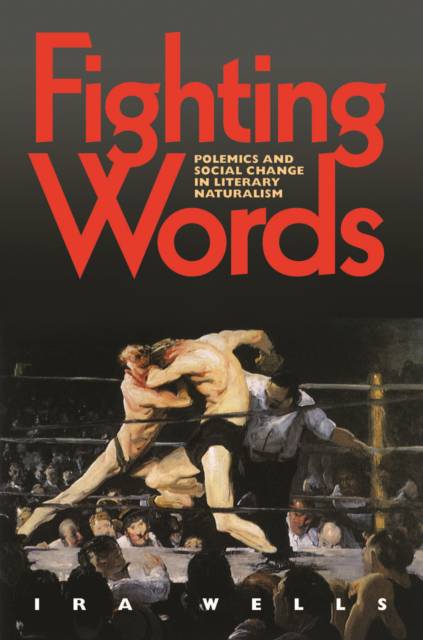
An entirely new understanding of what literary naturalism is and why it matters Ira Wells, countering the standard narrative of literary naturalism's much-touted concern with environmental and philosophical determinism, draws attention to the polemical essence of the genre and demonstrates how literary naturalists engaged instead with explosive political and cultural issues that remain fervently debated today. Naturalist writers, Wells argues in Fighting Words, are united less by a coherent philosophy than by an attitude, a posture of aggressive controversy, which happens to cluster loosely around particular social issues. To an extent not yet appreciated, literary naturalists took controversial--and frequently contrarian--positions on a wide range of literary, political, and social issues. Frank Norris, for instance, famously declared the innate inferiority of female novelists and frequently wrote about literature in tones suggestive of racial warfare. Theodore Dreiser once advocated, with deadly earnestness, a program of state-run infanticide for disabled or unwanted children. Richard Wright praised the Stalin-Hitler agreement of 1939 as "a great step toward peace." While many of their arguments were irascible, attention-seeking, and self-consciously inflammatory, the combative spirit that fueled these outbursts remains central to the canonical texts of the movement. Wells considers Frank Norris's The Octopus in light of the emerging discourses of environmentalism and ecological despoliation, and examines the issue of abortion in Theodore Dreiser's An American Tragedy. A chapter on Richard Wright's Native Son takes issue with traditional humanistic readings of its protagonist by analyzing the disturbing relationship between terrorism and lynching as a crime and punishment that resists formal incorporation into the law. By highlighting the contentious rhetoric that infuses the canonical texts of literary naturalism, Fighting Words opens up a wide-ranging and interdisciplinary interrogation of racial, sexual, and environmental polemics in American culture.
Specificaties
Betrokkenen
- Auteur(s):
- Uitgeverij:
Inhoud
- Aantal bladzijden:
- 208
- Taal:
- Engels
- Reeks:
Eigenschappen
- Productcode (EAN):
- 9780817317997
- Verschijningsdatum:
- 25/06/2013
- Uitvoering:
- Hardcover
- Formaat:
- Genaaid
- Afmetingen:
- 155 mm x 231 mm
- Gewicht:
- 453 g


Alleen bij Standaard Boekhandel
+ 86 punten op je klantenkaart van Standaard Boekhandel
Cadeau

AANGERADEN


Beoordelingen
We publiceren alleen reviews die voldoen aan de voorwaarden voor reviews. Bekijk onze voorwaarden voor reviews.