


- Afhalen na 1 uur in een winkel met voorraad
- Gratis thuislevering in België vanaf € 30
- Ruim aanbod met 7 miljoen producten
- Afhalen na 1 uur in een winkel met voorraad
- Gratis thuislevering in België vanaf € 30
- Ruim aanbod met 7 miljoen producten





€ 34,95
+ 69 punten
Omschrijving
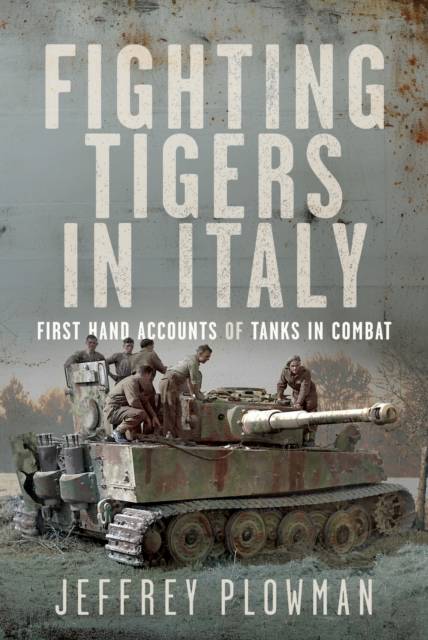
Examines the feared German Tiger tank, its strengths and weaknesses, and Allied encounters from North Africa to Italy.
Of all the tanks in the German arsenal the Tiger was perhaps the one most feared, certainly by the Western Allies from the time they first encountered it in North Africa to the end of the war in Europe. This was no small feat for a tank of which only 1,347 were produced out of a total German tank production of around 27,000 tanks. This is not surprising given that it was armed with the dreaded 88 mm gun, the rounds of which could pass right through a Sherman tank and whose thick frontal armour meant that it was virtually invulnerable to anything the Allies could field at that time.
Though a fearsome weapon on the surface the Tiger was not well suited to offensive operations. It suffered from a weak transmission, which often failed. The lack of suitable recovery vehicles, until the Bergepanther made its appearance, meant the crews would often attempt to tow it with another Tiger rather than abandon it. This usually resulted in the loss of both Tigers as the towing tank also broke down through mechanical failure, brought about by the extra strain imposed on the towing vehicle. However, as a defensive weapon it was second to none, especially in Italy. Here the country's hilly terrain, with its scattering of small villages, restricted the routes of advance the Allies could take. Just the knowledge that Tigers were in the area imposed an extra caution on Allied tank crews, particularly after their duels with its lighter Panzer cousins.
Starting at the Anzio amphibious landings in January 1944 and finishing with the Senio offensive in 1945, the book draws on official histories unit diaries, reports, and personal accounts to look at encounters between Tigers (and sometimes the Elefant based on the hull of its cousin the Porsche Tiger). In this way it seeks to examine how the crews of Allied armour leaned to deal with this menace and sometimes failed to do so to their chagrin. To illustrate this the narrative delves into a number of detailed accounts of some significant encounters at Anzio, in Tuscany and on the plains of the Po Valley.
Of all the tanks in the German arsenal the Tiger was perhaps the one most feared, certainly by the Western Allies from the time they first encountered it in North Africa to the end of the war in Europe. This was no small feat for a tank of which only 1,347 were produced out of a total German tank production of around 27,000 tanks. This is not surprising given that it was armed with the dreaded 88 mm gun, the rounds of which could pass right through a Sherman tank and whose thick frontal armour meant that it was virtually invulnerable to anything the Allies could field at that time.
Though a fearsome weapon on the surface the Tiger was not well suited to offensive operations. It suffered from a weak transmission, which often failed. The lack of suitable recovery vehicles, until the Bergepanther made its appearance, meant the crews would often attempt to tow it with another Tiger rather than abandon it. This usually resulted in the loss of both Tigers as the towing tank also broke down through mechanical failure, brought about by the extra strain imposed on the towing vehicle. However, as a defensive weapon it was second to none, especially in Italy. Here the country's hilly terrain, with its scattering of small villages, restricted the routes of advance the Allies could take. Just the knowledge that Tigers were in the area imposed an extra caution on Allied tank crews, particularly after their duels with its lighter Panzer cousins.
Starting at the Anzio amphibious landings in January 1944 and finishing with the Senio offensive in 1945, the book draws on official histories unit diaries, reports, and personal accounts to look at encounters between Tigers (and sometimes the Elefant based on the hull of its cousin the Porsche Tiger). In this way it seeks to examine how the crews of Allied armour leaned to deal with this menace and sometimes failed to do so to their chagrin. To illustrate this the narrative delves into a number of detailed accounts of some significant encounters at Anzio, in Tuscany and on the plains of the Po Valley.
Specificaties
Betrokkenen
- Auteur(s):
- Uitgeverij:
Inhoud
- Aantal bladzijden:
- 240
- Taal:
- Engels
Eigenschappen
- Productcode (EAN):
- 9781399057868
- Verschijningsdatum:
- 30/09/2025
- Uitvoering:
- Hardcover
- Formaat:
- Genaaid
- Afmetingen:
- 163 mm x 241 mm
- Gewicht:
- 703 g


Alleen bij Standaard Boekhandel
+ 69 punten op je klantenkaart van Standaard Boekhandel
Cadeau

AANGERADEN


Beoordelingen
We publiceren alleen reviews die voldoen aan de voorwaarden voor reviews. Bekijk onze voorwaarden voor reviews.