



Bedankt voor het vertrouwen het afgelopen jaar! Om jou te bedanken bieden we GRATIS verzending (in België) aan op alles gedurende de hele maand januari.
- Afhalen na 1 uur in een winkel met voorraad
- In januari gratis thuislevering in België
- Ruim aanbod met 7 miljoen producten
Bedankt voor het vertrouwen het afgelopen jaar! Om jou te bedanken bieden we GRATIS verzending (in België) aan op alles gedurende de hele maand januari.
- Afhalen na 1 uur in een winkel met voorraad
- In januari gratis thuislevering in België
- Ruim aanbod met 7 miljoen producten





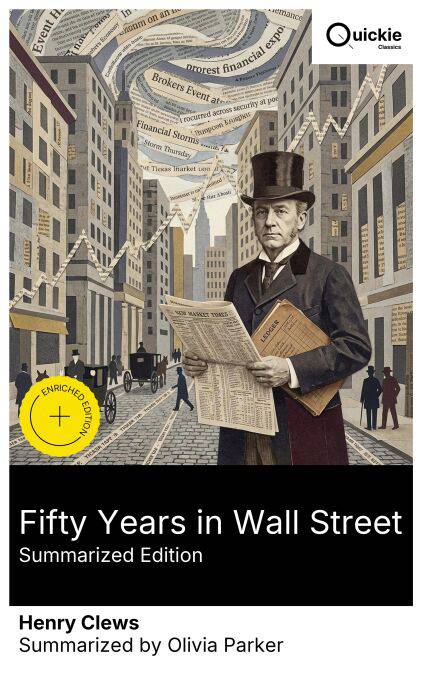
Fifty Years in Wall Street (Summarized Edition) E-BOOK
Enriched edition. Wall Street history and high finance: a 19th-century investment banking memoir and analysis of American stock market evolution
Henry Clews
E-book | Engels
€ 0,49
Omschrijving
Fifty Years in Wall Street is Henry Clews's capacious memoir-history of American finance from the 1850s to the twentieth century. Mixing eyewitness narrative with asides, Clews recounts the 1857, 1873, and 1907 panics; the 1869 gold corner and Erie wars; and encounters with Gould, Fisk, Vanderbilt, and Drew. Urbane yet moralizing, the prose alternates anecdote with maxims, producing a hybrid of chronicle, character sketch, and investor's catechism. As a Gilded Age insider's testament—expanded from earlier reminiscences—it stands near Lawson's exposés and anticipates Lefèvre's Reminiscences, yet insists on prudence amid speculation. Clews, a British-born banker who emigrated young and founded his own Wall Street house, writes from the double vantage of participant and commentator. Decades in brokerage, syndicate work, and public advocacy yielded a reformist sensibility without blunting the trader's eye. His market letters and civic engagements honed the explanatory voice here, linking episodic scandal to the structures of credit, confidence, and crowd psychology. Scholars of financial history, students of capitalism, and reflective investors will value it as a primary source—rich in detail, frank in bias, and instructive. Read it for its portraits and parables, and for its steady insistence that character, not cleverness, governs markets in the long run.
Quickie Classics summarizes timeless works with precision, preserving the author's voice and keeping the prose clear, fast, and readable—distilled, never diluted. Enriched Edition extras: Introduction · Synopsis · Historical Context · Brief Analysis · 4 Reflection Q&As · Editorial Footnotes.
Quickie Classics summarizes timeless works with precision, preserving the author's voice and keeping the prose clear, fast, and readable—distilled, never diluted. Enriched Edition extras: Introduction · Synopsis · Historical Context · Brief Analysis · 4 Reflection Q&As · Editorial Footnotes.
Specificaties
Betrokkenen
- Auteur(s):
- Uitgeverij:
Inhoud
- Aantal bladzijden:
- 298
- Taal:
- Engels
Eigenschappen
- Productcode (EAN):
- 8596547881209
- Verschijningsdatum:
- 9/01/2026
- Uitvoering:
- E-book
- Beveiligd met:
- Digital watermarking
- Formaat:
- ePub



Alleen bij Standaard Boekhandel
SOLDEN


Beoordelingen
We publiceren alleen reviews die voldoen aan de voorwaarden voor reviews. Bekijk onze voorwaarden voor reviews.