


- Afhalen na 1 uur in een winkel met voorraad
- Gratis thuislevering in België vanaf € 30
- Ruim aanbod met 7 miljoen producten
- Afhalen na 1 uur in een winkel met voorraad
- Gratis thuislevering in België vanaf € 30
- Ruim aanbod met 7 miljoen producten





€ 24,45
+ 48 punten
Omschrijving
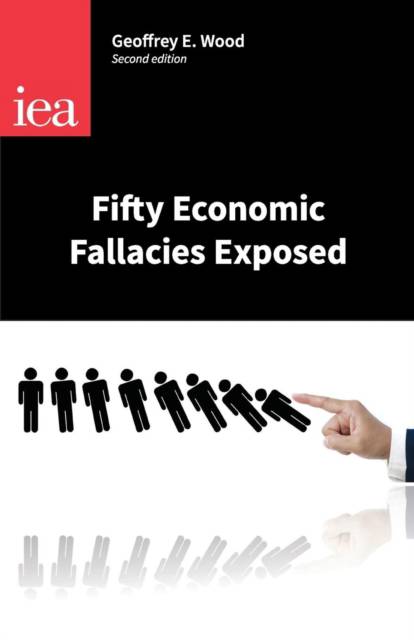
Whilst it is impossible to argue that the earth is flat without fearing ridicule, fallacies in economics are widespread. Such fallacies pervade the intellectual sphere and even influence policy. Professor Geoffrey Wood of the University of Buckingham exposes such popular economic fallacies in this revised edition of Fifty Economic Fallacies Exposed. Professor Wood looks at, for example, the supposed dangers of free trade, the abilities of governments to control the economy, the effects of government regulation and whether millions of jobs depend on our continued membership of the European Union. These lucid and stimulating articles are invaluable to students struggling to master some of the complexities of economic theory and its applications, who often find that the most effective way to learn economic analysis is to see such fallacies exposed. It is a text particularly suitable for first-year economics students, complementing existing textbooks as it does, and clarifying basic concepts in economics while demonstrating the practical uses of economic theory
Specificaties
Betrokkenen
- Auteur(s):
- Uitgeverij:
Inhoud
- Aantal bladzijden:
- 192
- Taal:
- Engels
- Reeks:
Eigenschappen
- Productcode (EAN):
- 9780255366953
- Verschijningsdatum:
- 1/04/2015
- Uitvoering:
- Paperback
- Formaat:
- Trade paperback (VS)
- Afmetingen:
- 130 mm x 196 mm
- Gewicht:
- 317 g


Alleen bij Standaard Boekhandel
+ 48 punten op je klantenkaart van Standaard Boekhandel
AANGERADEN


Beoordelingen
We publiceren alleen reviews die voldoen aan de voorwaarden voor reviews. Bekijk onze voorwaarden voor reviews.