


- Afhalen na 1 uur in een winkel met voorraad
- Gratis thuislevering in België vanaf € 30
- Ruim aanbod met 7 miljoen producten
- Afhalen na 1 uur in een winkel met voorraad
- Gratis thuislevering in België vanaf € 30
- Ruim aanbod met 7 miljoen producten





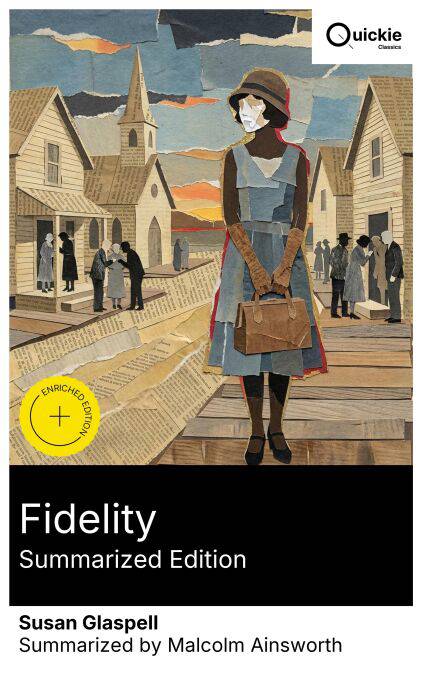
Fidelity (Summarized Edition) E-BOOK
Enriched edition. An early 20th-century tale of love and betrayal tested by societal expectations, gender dynamics, and the search for forgiveness.
Susan Glaspell
E-book | Engels
€ 1,99
+ 1 punten
Omschrijving
Fidelity (1915) is a portrait of a Midwestern community confronted by a woman's refusal to repent. When Ruth Holland returns to her Iowa hometown years after leaving with a married lover, Glaspell stages collisions among conscience, public judgment, and the changing meanings of loyalty. The novel's psychological realism, tempered irony, and dramatic scene-building reveal the labors of sympathy and the costs of moral certainty. Situated within Progressive Era debates about marriage and female autonomy, Fidelity extends regional realism toward a feminist ethics. Glaspell—journalist turned novelist and cofounder of the Provincetown Players, a Pulitzer Prize–winning dramatist—knew both the small-town scrutiny of her Iowa upbringing and the heterodox ferment of Greenwich Village. Her partnership with George Cram Cook, begun while he was married, and her reporting on cases of domestic transgression furnished lived experience and analytic acuity. These backgrounds enable her to parse community power, gendered double standards, and the uneasy boundary between law and compassion without didacticism. Readers interested in Edith Wharton's moral cartographies or Kate Chopin's intimate rebellions will find Fidelity an incisive, humane companion. Ideal for courses on American realism, women's writing, and ethics, it also rewards general readers seeking a novel that interrogates judgment while practicing it gently.
Quickie Classics summarizes timeless works with precision, preserving the author's voice and keeping the prose clear, fast, and readable—distilled, never diluted. Enriched Edition extras: Introduction · Synopsis · Historical Context · Brief Analysis · 4 Reflection Q&As · Editorial Footnotes.
Quickie Classics summarizes timeless works with precision, preserving the author's voice and keeping the prose clear, fast, and readable—distilled, never diluted. Enriched Edition extras: Introduction · Synopsis · Historical Context · Brief Analysis · 4 Reflection Q&As · Editorial Footnotes.
Specificaties
Betrokkenen
- Auteur(s):
- Uitgeverij:
Inhoud
- Aantal bladzijden:
- 136
- Taal:
- Engels
Eigenschappen
- Productcode (EAN):
- 8596547880929
- Verschijningsdatum:
- 9/01/2026
- Uitvoering:
- E-book
- Beveiligd met:
- Digital watermarking
- Formaat:
- ePub


Alleen bij Standaard Boekhandel
+ 1 punten op je klantenkaart van Standaard Boekhandel
AANGERADEN


Beoordelingen
We publiceren alleen reviews die voldoen aan de voorwaarden voor reviews. Bekijk onze voorwaarden voor reviews.