


- Afhalen na 1 uur in een winkel met voorraad
- Gratis thuislevering in België vanaf € 30
- Ruim aanbod met 7 miljoen producten
- Afhalen na 1 uur in een winkel met voorraad
- Gratis thuislevering in België vanaf € 30
- Ruim aanbod met 7 miljoen producten





€ 169,45
+ 338 punten
Omschrijving
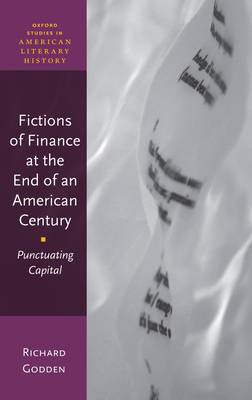
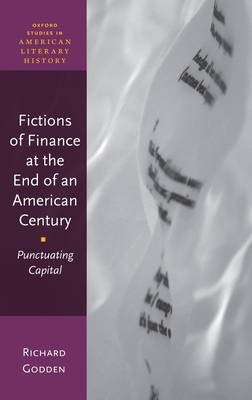
Fictions of Finance at the End of an American Century explores how an economy determines the language of those who live among its imperatives--and how it makes available to them the stories that they can and cannot tell, and the manner of their telling. Read closely, fictional narrative may expose the historical structures that determine literary language use, and that of language more generally. The study, the fourth in a quartet of studies addressing the emergence and decline of a Fordist regime of capitalist accumulation, offers an account of 'the sub-semantic whispering' that haunts the literature of the financial turn--which is to say, an account of how the complexities of words and their histories register an expanding industrial economy's organizing contradictions and failures. Reading in the light of deindustrialization and the rise of US finance capital after 1973, it deploys and elaborates on a materialist theory of language that explains how syntactic as well as semantic structures register a financializing economy's core contradictions, those associated particularly with debt, risk, and volatility. The volume listens for the under-heard syntactical breaks that punctuate language under the global hegemony of finance, breaks that express the unuttered in all utterance, taking as its exemplary texts primarily works by Bret Easton Ellis, Jayne Anne Phillips, and David Foster Wallace.
Specificaties
Betrokkenen
- Auteur(s):
- Uitgeverij:
Inhoud
- Aantal bladzijden:
- 290
- Taal:
- Engels
- Reeks:
Eigenschappen
- Productcode (EAN):
- 9780192867759
- Verschijningsdatum:
- 11/10/2023
- Uitvoering:
- Hardcover
- Formaat:
- Genaaid
- Afmetingen:
- 164 mm x 236 mm
- Gewicht:
- 598 g


Alleen bij Standaard Boekhandel
+ 338 punten op je klantenkaart van Standaard Boekhandel
CADEAU

AANGERADEN


Beoordelingen
We publiceren alleen reviews die voldoen aan de voorwaarden voor reviews. Bekijk onze voorwaarden voor reviews.