


- Afhalen na 1 uur in een winkel met voorraad
- Gratis thuislevering in België vanaf € 30
- Ruim aanbod met 7 miljoen producten
- Afhalen na 1 uur in een winkel met voorraad
- Gratis thuislevering in België vanaf € 30
- Ruim aanbod met 7 miljoen producten





€ 100,95
+ 201 punten
Uitvoering
Omschrijving
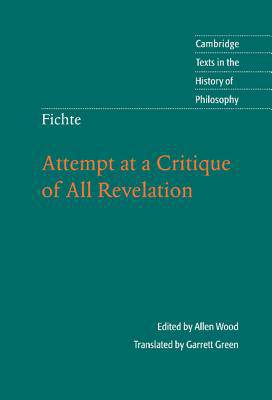
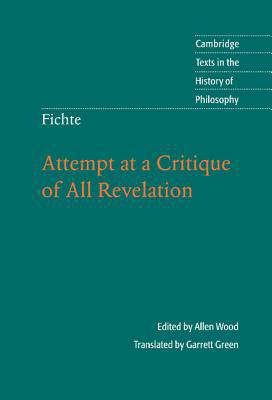
The Attempt at a Critique of All Revelation (1792) was the first published work of Johann Gottlieb Fichte (1762-1814), the founder of the German idealist movement in philosophy. It predated the system of philosophy which Fichte developed during his years in Jena, and for that reason - and possibly also because of its religious orientation - later commentators have tended to overlook the work in their treatments of Fichte's philosophy. It is, however, already representative of the most interesting aspects of Fichte's thought. It displays an affinity with his later moral psychology, introduces (in theological form) Fichte's distinctively 'second-person' conception of moral requirements, and employs the 'synthetic method' which is crucial to the transcendental systems Fichte developed during his Jena period. This volume offers a clear and accessible translation of the work by Garrett Green, while an introduction by Allen Wood sets the work in its historical and philosophical contexts.
Specificaties
Betrokkenen
- Auteur(s):
- Vertaler(s):
- Uitgeverij:
Inhoud
- Aantal bladzijden:
- 196
- Taal:
- Engels
- Reeks:
Eigenschappen
- Productcode (EAN):
- 9780521112796
- Verschijningsdatum:
- 24/12/2009
- Uitvoering:
- Hardcover
- Formaat:
- Ongenaaid / garenloos gebonden
- Afmetingen:
- 157 mm x 229 mm
- Gewicht:
- 430 g


Alleen bij Standaard Boekhandel
+ 201 punten op je klantenkaart van Standaard Boekhandel

Beoordelingen
We publiceren alleen reviews die voldoen aan de voorwaarden voor reviews. Bekijk onze voorwaarden voor reviews.