


- Afhalen na 1 uur in een winkel met voorraad
- Gratis thuislevering in België vanaf € 30
- Ruim aanbod met 7 miljoen producten
- Afhalen na 1 uur in een winkel met voorraad
- Gratis thuislevering in België vanaf € 30
- Ruim aanbod met 7 miljoen producten





€ 85,45
+ 170 punten
Uitvoering
Eenvoudig bestellen
Veilig betalen


Gratis thuislevering vanaf € 30 (via bpost)
Gratis levering in je Standaard Boekhandel
Omschrijving
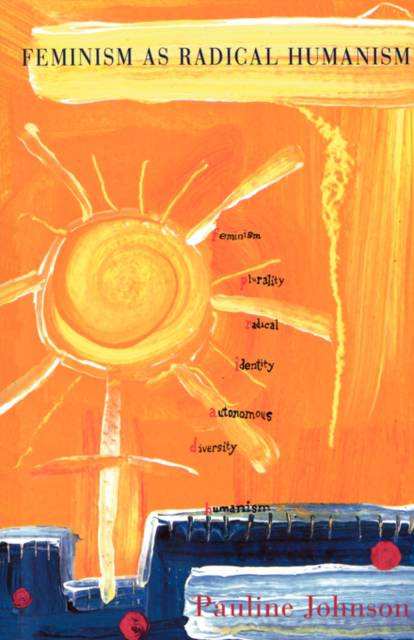
For Johnson, feminism must recognize itself as a humanism in order to avoid certain theoretical quagmires. [The argument] is extremely provocative, and even, I would say, necessary. This book is sure to be controversial and of interest to a wide audience in feminist theory. I know of no other treatment of feminism and humanism that is so clear, cogent, and systematic. Judith Grant University of Southern California Feminism is currently at an impasse. Both the liberation feminism of the 1970's and the more recent feminism of difference are increasingly faced with the limitations of their own perspectives. While feminists today generally acknowledge the need to recognise diversity, they lack a coherent framework through which this need can be articulated. In Feminism as Radical Humanism, Pauline Johnson calls for a reassessment of feminism's relationship to modern humanism. She argues that despite its very thorough and necessary critique of mainstream formulations of humanist ideals, feminism itself remains strongly committed to humanist values. Drawing on a broad range of political and intellectual traditions, Johnson demonstrates that, only by proudly affirming its own humanist commitments can feminist theory find a way to negotiate the impasse in which it currently finds itself. Feminism as Radical Humanism is an important and controversial contribution to feminist theory, and to the ongoing debate about the meaning of contemporary humanism.
Specificaties
Betrokkenen
- Auteur(s):
- Uitgeverij:
Inhoud
- Aantal bladzijden:
- 182
- Taal:
- Engels
Eigenschappen
- Productcode (EAN):
- 9780813323589
- Verschijningsdatum:
- 17/08/1994
- Uitvoering:
- Paperback
- Formaat:
- Trade paperback (VS)
- Afmetingen:
- 140 mm x 215 mm
- Gewicht:
- 281 g


Alleen bij Standaard Boekhandel
+ 170 punten op je klantenkaart van Standaard Boekhandel
CADEAU

AANGERADEN


Beoordelingen
We publiceren alleen reviews die voldoen aan de voorwaarden voor reviews. Bekijk onze voorwaarden voor reviews.