


- Afhalen na 1 uur in een winkel met voorraad
- Gratis thuislevering in België vanaf € 30
- Ruim aanbod met 7 miljoen producten
- Afhalen na 1 uur in een winkel met voorraad
- Gratis thuislevering in België vanaf € 30
- Ruim aanbod met 7 miljoen producten





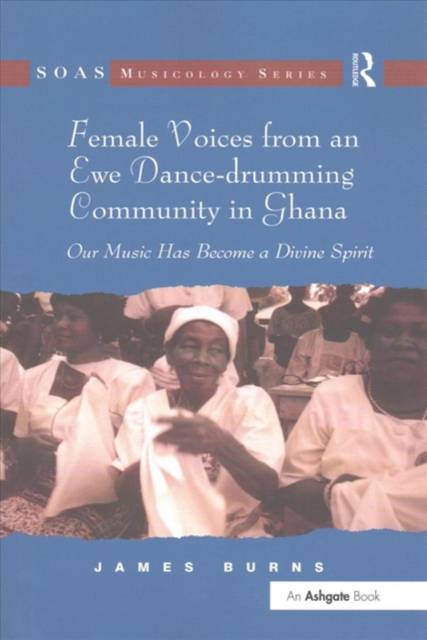
Female Voices from an Ewe Dance-drumming Community in Ghana
Our Music Has Become a Divine Spirit
James Burns
€ 122,45
+ 244 punten
Omschrijving
Ewe dance-drumming has been extensively studied throughout the history of ethnomusicology, but up to now there has not been a single study that addresses Ewe female musicians. James Burns redresses this deficiency through a detailed ethnography of a group of female musicians from the Dzigbordi community dance-drumming club from the rural town of Dzodze, located in South-Eastern Ghana. Dzigbordi was specifically chosen because of the author's long association with the group members, and because it is part of a genre known as adekede, or female songs of redress, where women musicians critique gender relations in society. Burns uses audio and video interviews, recordings of rehearsals and performances and detailed collaborative analyses of song texts, dance routines and performance practice to address important methodological shifts in ethnomusicology that outline a more humanistic perspective of music cultures. This perspective encompasses the inter-linkages between history, social processes and individual creative artists. The voices of Dzigbordi women provide us not only with a more complete picture of Ewe music-making, they further allow us to better understand the relationship between culture, social life and individual creativity. The book will therefore appeal to those interested in African Studies, Gender Studies and Oral Literature, as well as ethnomusicology. Includes documentary on the downloadable resources.
Specificaties
Betrokkenen
- Auteur(s):
- Uitgeverij:
Inhoud
- Aantal bladzijden:
- 234
- Taal:
- Engels
- Reeks:
Eigenschappen
- Productcode (EAN):
- 9781138252264
- Verschijningsdatum:
- 11/11/2016
- Uitvoering:
- Paperback
- Formaat:
- Trade paperback (VS)
- Afmetingen:
- 156 mm x 234 mm
- Gewicht:
- 335 g


Alleen bij Standaard Boekhandel
+ 244 punten op je klantenkaart van Standaard Boekhandel
Cadeau

AANGERADEN


Beoordelingen
We publiceren alleen reviews die voldoen aan de voorwaarden voor reviews. Bekijk onze voorwaarden voor reviews.