



Bedankt voor het vertrouwen het afgelopen jaar! Om jou te bedanken bieden we GRATIS verzending (in België) aan op alles gedurende de hele maand januari.
- Afhalen na 1 uur in een winkel met voorraad
- In januari gratis thuislevering in België
- Ruim aanbod met 7 miljoen producten
Bedankt voor het vertrouwen het afgelopen jaar! Om jou te bedanken bieden we GRATIS verzending (in België) aan op alles gedurende de hele maand januari.
- Afhalen na 1 uur in een winkel met voorraad
- In januari gratis thuislevering in België
- Ruim aanbod met 7 miljoen producten





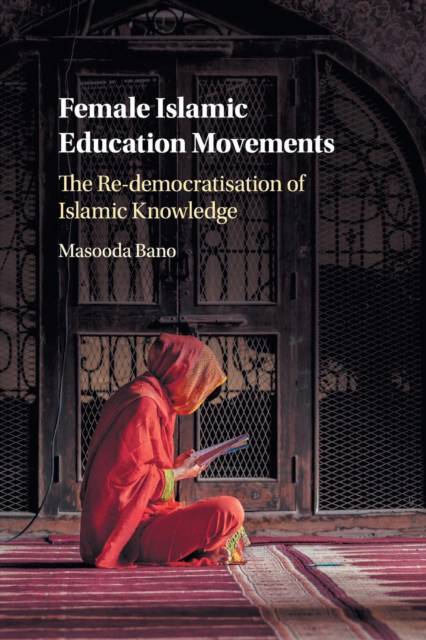
Female Islamic Education Movements
The Re-democratisation of Islamic Knowledge
Masooda Bano
Paperback | Engels
€ 64,95
+ 129 punten
Omschrijving
Since the 1970s, movements aimed at giving Muslim women access to the serious study of Islamic texts have emerged across the world. In this book, Masooda Bano argues that the creative spirit that marked the rise and consolidation of Islam, whereby Islam inspired serious intellectual engagement to create optimal societal institutions, can be found within these education movements. Drawing on rich ethnographic material from Pakistan, northern Nigeria and Syria, Bano questions the restricted notion of agency associated with these movements, exploring the educational networks which have attracted educated, professional and culturally progressive Muslim women to textual study, thus helping to reverse the most damaging legacy of colonial rule in Muslim societies: the isolation of modern and Islamic knowledge. With its comparative approach, this will appeal to those studying and researching the role of women across Africa, the Middle East and South Asia, as well as the wider Muslim world.
Specificaties
Betrokkenen
- Auteur(s):
- Uitgeverij:
Inhoud
- Aantal bladzijden:
- 264
- Taal:
- Engels
Eigenschappen
- Productcode (EAN):
- 9781316638613
- Verschijningsdatum:
- 30/05/2019
- Uitvoering:
- Paperback
- Formaat:
- Trade paperback (VS)
- Afmetingen:
- 152 mm x 229 mm
- Gewicht:
- 358 g



Alleen bij Standaard Boekhandel
+ 129 punten op je klantenkaart van Standaard Boekhandel
SOLDEN


Beoordelingen
We publiceren alleen reviews die voldoen aan de voorwaarden voor reviews. Bekijk onze voorwaarden voor reviews.