


- Afhalen na 1 uur in een winkel met voorraad
- Gratis thuislevering in België vanaf € 30
- Ruim aanbod met 7 miljoen producten
- Afhalen na 1 uur in een winkel met voorraad
- Gratis thuislevering in België vanaf € 30
- Ruim aanbod met 7 miljoen producten





€ 31,45
+ 62 punten
Uitvoering
Omschrijving
Winner of the 2020 Society for Economic Botany's Mary W. Klinger Book Award
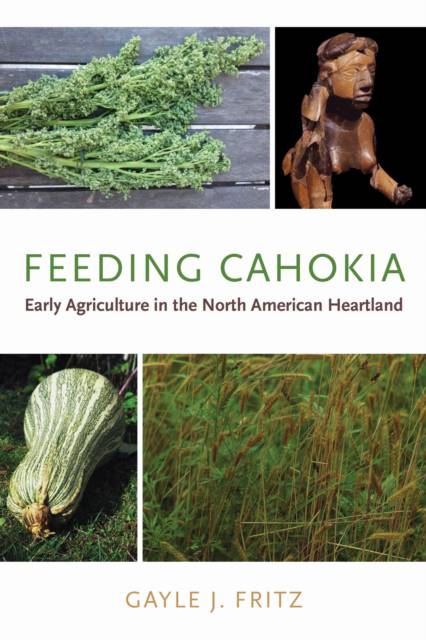
An authoritative and thoroughly accessible overview of farming and food practices at Cahokia Agriculture is rightly emphasized as the center of the economy in most studies of Cahokian society, but the focus is often predominantly on corn. This farming economy is typically framed in terms of ruling elites living in mound centers who demanded tribute and a mass surplus to be hoarded or distributed as they saw fit. Farmers are cast as commoners who grew enough surplus corn to provide for the elites. Feeding Cahokia: Early Agriculture in the North American Heartland presents evidence to demonstrate that the emphasis on corn has created a distorted picture of Cahokia's agricultural practices. Farming at Cahokia was biologically diverse and, as such, less prone to risk than was maize-dominated agriculture. Gayle J. Fritz shows that the division between the so-called elites and commoners simplifies and misrepresents the statuses of farmers--a workforce consisting of adult women and their daughters who belonged to kin groups crosscutting all levels of the Cahokian social order. Many farmers had considerable influence and decision-making authority, and they were valued for their economic contributions, their skills, and their expertise in all matters relating to soils and crops. Fritz examines the possible roles played by farmers in the processes of producing and preparing food and in maintaining cosmological balance. This highly accessible narrative by an internationally known paleoethnobotanist highlights the biologically diverse agricultural system by focusing on plants, such as erect knotweed, chenopod, and maygrass, which were domesticated in the midcontinent and grown by generations of farmers before Cahokia Mounds grew to be the largest Native American population center north of Mexico. Fritz also looks at traditional farming systems to apply strategies that would be helpful to modern agriculture, including reviving wild and weedy descendants of these lost crops for redomestication. With a wealth of detail on specific sites, traditional foods, artifacts such as famous figurines, and color photos of significant plants, Feeding Cahokia will satisfy both scholars and interested readers.Specificaties
Betrokkenen
- Auteur(s):
- Uitgeverij:
Inhoud
- Aantal bladzijden:
- 232
- Taal:
- Engels
- Reeks:
Eigenschappen
- Productcode (EAN):
- 9780817360047
- Verschijningsdatum:
- 31/03/2020
- Uitvoering:
- Paperback
- Formaat:
- Trade paperback (VS)
- Afmetingen:
- 152 mm x 226 mm
- Gewicht:
- 430 g


Alleen bij Standaard Boekhandel
+ 62 punten op je klantenkaart van Standaard Boekhandel
Cadeau

AANGERADEN


Beoordelingen
We publiceren alleen reviews die voldoen aan de voorwaarden voor reviews. Bekijk onze voorwaarden voor reviews.