



Bedankt voor het vertrouwen het afgelopen jaar! Om jou te bedanken bieden we GRATIS verzending (in België) aan op alles gedurende de hele maand januari.
- Afhalen na 1 uur in een winkel met voorraad
- In januari gratis thuislevering in België
- Ruim aanbod met 7 miljoen producten
Bedankt voor het vertrouwen het afgelopen jaar! Om jou te bedanken bieden we GRATIS verzending (in België) aan op alles gedurende de hele maand januari.
- Afhalen na 1 uur in een winkel met voorraad
- In januari gratis thuislevering in België
- Ruim aanbod met 7 miljoen producten





€ 21,00
+ 21 punten
Omschrijving
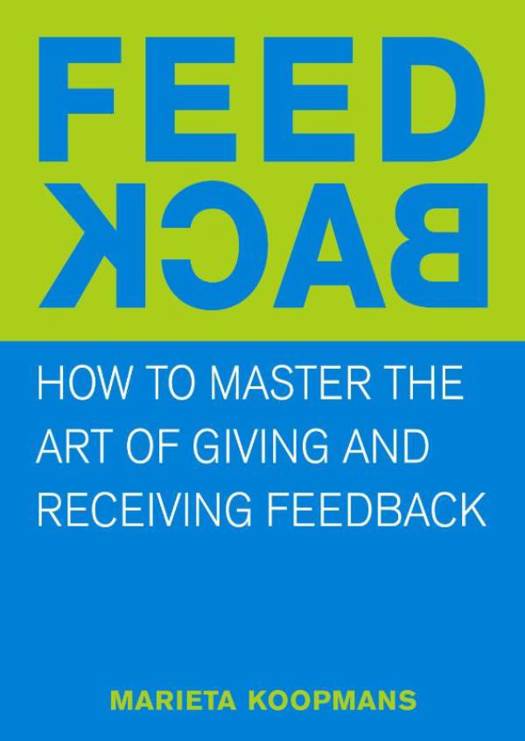
Do you tend to keep your comments about others to yourself? Is there a difference between giving feedback to an employee, a colleague or your boss? Do you avoid praising others for their efforts?
Many people would answer these questions with a resounding yes. They are uncomfortable dealing with feedback and would rather sidestep the issue entirely. But open, honest communication enables others to learn and grow, which improves their performance in the future. It is a well-accepted fact that feedback directs behaviour and motivates performance at work no matter how good or effective an individual is, he can always get better.
Giving feedback effectively is a skill that comes naturally to few but can be learned by anyone. This practical book explains how to listen for understanding and information, and how to get others to be receptive to your comments on their performance. It teaches you how to be specific and descriptive in your observations, without injecting any of your own value judgments that could bruise the other persons ego or trigger a defensive reaction. You also get insight into how to deal with the associated fears and other negative emotions that may come up. In the process, you help yourself, as well as others, to learn and progress.
Marieta Koopmans is a social psychologist and specialises in one-to-one coaching of managers under the name C'enter. She also works as a freelance giving leadership training courses for the Schouten & Nelissen training institute.
Many people would answer these questions with a resounding yes. They are uncomfortable dealing with feedback and would rather sidestep the issue entirely. But open, honest communication enables others to learn and grow, which improves their performance in the future. It is a well-accepted fact that feedback directs behaviour and motivates performance at work no matter how good or effective an individual is, he can always get better.
Giving feedback effectively is a skill that comes naturally to few but can be learned by anyone. This practical book explains how to listen for understanding and information, and how to get others to be receptive to your comments on their performance. It teaches you how to be specific and descriptive in your observations, without injecting any of your own value judgments that could bruise the other persons ego or trigger a defensive reaction. You also get insight into how to deal with the associated fears and other negative emotions that may come up. In the process, you help yourself, as well as others, to learn and progress.
Marieta Koopmans is a social psychologist and specialises in one-to-one coaching of managers under the name C'enter. She also works as a freelance giving leadership training courses for the Schouten & Nelissen training institute.
Specificaties
Betrokkenen
- Auteur(s):
- Uitgeverij:
Inhoud
- Aantal bladzijden:
- 95
- Taal:
- Engels
Eigenschappen
- Productcode (EAN):
- 9789058712615
- Verschijningsdatum:
- 18/12/2015
- Uitvoering:
- E-book
- Beveiligd met:
- Digital watermarking
- Formaat:
- ePub


Alleen bij Standaard Boekhandel
+ 21 punten op je klantenkaart van Standaard Boekhandel
CADEAU


Beoordelingen
We publiceren alleen reviews die voldoen aan de voorwaarden voor reviews. Bekijk onze voorwaarden voor reviews.