


- Afhalen na 1 uur in een winkel met voorraad
- Gratis thuislevering in België vanaf € 30
- Ruim aanbod met 7 miljoen producten
- Afhalen na 1 uur in een winkel met voorraad
- Gratis thuislevering in België vanaf € 30
- Ruim aanbod met 7 miljoen producten





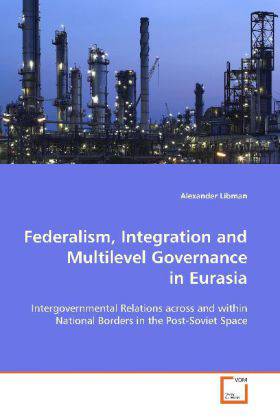
Federalism, Integration and Multilevel Governance in Eurasia
Intergovernmental Relations across and within National Borders in the Post-Soviet Space
Alexander Libman
Paperback | Engels
€ 77,95
+ 155 punten
Omschrijving
The collapse of the Soviet Union initiated a set of
integration and disintegration processes between
and within the new independent states of Eurasia.
Thus it created a perfect playground for
comparing and studying the co-evolution of different
forms of interaction between governments.
The aim of this book is to analyze different
projects of multi-level governance created after the
dissolution of the hierarchical Soviet system,
including decentralization in individual post-Soviet
countries and development of post-Soviet regionalism
and regional integration in a unified
framework, combining elements of international
political economy and economics of endogenous
decentralization. The book also looks at the third
form of integration, which has been virtually
ignored by the literature so far: the vivid
regionalization based on investments of Russian and
Kazakhstan multinationals in the post-Soviet
countries. It, finally, shows that the development of
multi-level governance had a profound impact on both
success of reforms in the former Soviet
Union and specifics of economic policy pursued by
the main actors in the region.
integration and disintegration processes between
and within the new independent states of Eurasia.
Thus it created a perfect playground for
comparing and studying the co-evolution of different
forms of interaction between governments.
The aim of this book is to analyze different
projects of multi-level governance created after the
dissolution of the hierarchical Soviet system,
including decentralization in individual post-Soviet
countries and development of post-Soviet regionalism
and regional integration in a unified
framework, combining elements of international
political economy and economics of endogenous
decentralization. The book also looks at the third
form of integration, which has been virtually
ignored by the literature so far: the vivid
regionalization based on investments of Russian and
Kazakhstan multinationals in the post-Soviet
countries. It, finally, shows that the development of
multi-level governance had a profound impact on both
success of reforms in the former Soviet
Union and specifics of economic policy pursued by
the main actors in the region.
Specificaties
Betrokkenen
- Auteur(s):
- Uitgeverij:
Inhoud
- Aantal bladzijden:
- 208
- Taal:
- Engels
Eigenschappen
- Productcode (EAN):
- 9783639127041
- Uitvoering:
- Paperback
- Afmetingen:
- 220


Alleen bij Standaard Boekhandel
+ 155 punten op je klantenkaart van Standaard Boekhandel
Cadeau

AANGERADEN


Beoordelingen
We publiceren alleen reviews die voldoen aan de voorwaarden voor reviews. Bekijk onze voorwaarden voor reviews.