


- Afhalen na 1 uur in een winkel met voorraad
- Gratis thuislevering in België vanaf € 30
- Ruim aanbod met 7 miljoen producten
- Afhalen na 1 uur in een winkel met voorraad
- Gratis thuislevering in België vanaf € 30
- Ruim aanbod met 7 miljoen producten





€ 47,45
+ 94 punten
Uitvoering
Omschrijving
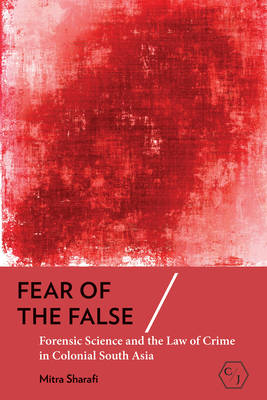
Fear of the False uncovers colonial South Asia's critical role in the development of forensic science. Around 1900, the government of British India created a web of institutions for the scientific detection of crime. Driven by anxieties about "native mendacity," newly minted forensic analysts focused on uncovering faked evidence planted by South Asians. These experts, joining toxicologists known as "chemical examiners," were supposed to extract objective, scientific truth in the service of British justice. But in trying to counteract the presumed tendency of colonized peoples to lie, the system enabled widespread misconduct by state experts, increasing the risk of wrongful convictions of South Asian defendants.
Through scrupulously documented legal cases, Mitra Sharafi reveals that colonial dynamics put special pressure on the relationship between truth and justice. Examining falsity on both sides of the law through the use of testing to (mis)identify poisons, blood, and spermatozoa, as well as debates over adversarialism and inquisitorialism in the colonial courtroom, Fear of the False explores advances in forensic science and shortcuts in criminal procedure against the backdrop of colonial mistrust.
Thanks to generous funding from the University of Wisconsin Law School, the ebook editions of this book are available as open access volumes through the Cornell Open initiative.
Specificaties
Betrokkenen
- Auteur(s):
- Uitgeverij:
Inhoud
- Aantal bladzijden:
- 276
- Taal:
- Engels
- Reeks:
Eigenschappen
- Productcode (EAN):
- 9781501785986
- Verschijningsdatum:
- 15/04/2026
- Uitvoering:
- Paperback
- Formaat:
- Trade paperback (VS)
- Afmetingen:
- 152 mm x 229 mm
- Gewicht:
- 371 g


Alleen bij Standaard Boekhandel
+ 94 punten op je klantenkaart van Standaard Boekhandel
Cadeau

AANGERADEN


Beoordelingen
We publiceren alleen reviews die voldoen aan de voorwaarden voor reviews. Bekijk onze voorwaarden voor reviews.