


- Afhalen na 1 uur in een winkel met voorraad
- Gratis thuislevering in België vanaf € 30
- Ruim aanbod met 7 miljoen producten
- Afhalen na 1 uur in een winkel met voorraad
- Gratis thuislevering in België vanaf € 30
- Ruim aanbod met 7 miljoen producten





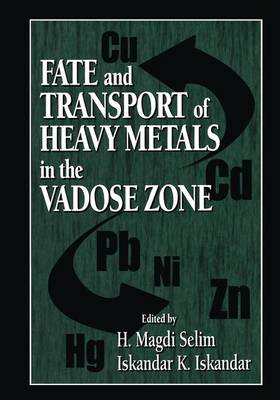
Fate and Transport of Heavy Metals in the Vadose Zone
I K Iskandar, H Magdi Selim
Hardcover | Engels
€ 209,45
+ 418 punten
Omschrijving
The chapters of this book were originally presented at the Fourth International Conference on the Biogeochemistry of Trace Elements, in June 1997 at Berkeley, California. The results of that symposium are now available to assist both specialists and those concerned with broader environmental issues. The first four chapters of Fate and Transport of Heavy Metals in the Vadose Zone are devoted to sorption-desorption processes. Subjects include the kinetics of trace metal sorption-desorption, adsorption of nickel and their isotherms, cadmium reactions, and retention mechanisms of both linear and nonlinear types. The next three sections describe complexation and speciation processes. The authors consider the effect of humic and fulvic acids, the binding of copper with organic matter, and the rate of dissolved selenium. Chapters eight through eleven scrutinize the bioavailability and retention of heavy metals and their mobility in the vadose zone. Twelve details plant-available concentration levels for heavy metals in the vadose zone. The last section relates case studies that are relevant to environmental affairs. Features
Specificaties
Betrokkenen
- Auteur(s):
- Uitgeverij:
Inhoud
- Aantal bladzijden:
- 344
- Taal:
- Engels
Eigenschappen
- Productcode (EAN):
- 9780849341120
- Verschijningsdatum:
- 23/04/1999
- Uitvoering:
- Hardcover
- Formaat:
- Genaaid
- Afmetingen:
- 186 mm x 263 mm
- Gewicht:
- 725 g


Alleen bij Standaard Boekhandel
+ 418 punten op je klantenkaart van Standaard Boekhandel
Cadeau

AANGERADEN


Beoordelingen
We publiceren alleen reviews die voldoen aan de voorwaarden voor reviews. Bekijk onze voorwaarden voor reviews.