


- Afhalen na 1 uur in een winkel met voorraad
- Gratis thuislevering in België vanaf € 30
- Ruim aanbod met 7 miljoen producten
- Afhalen na 1 uur in een winkel met voorraad
- Gratis thuislevering in België vanaf € 30
- Ruim aanbod met 7 miljoen producten





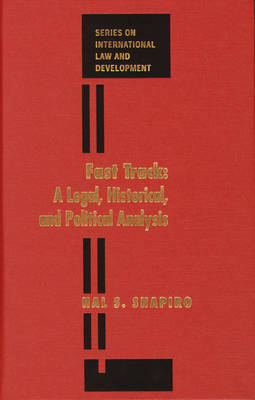
Fast Track: A Legal, Historical, and Political Analysis
Hal Shapiro
€ 331,95
+ 663 punten
Omschrijving
Fast track was conceived as a mundane procedural mechanism to enhance the president's credibility in negotiating complex multilateral trade agreements by streamlining the congressional approval process into an up-or-down vote in return for enhanced congressional oversight. It allows the President to negotiate international trade agreements knowing that Congress will provide a timely vote on the agreement without amendments. Given its seminal importance to the trade debate, however, fast track has acquired greater significance and controversy.
This incisive text examines whether fast track is an evolutionary advancement in U.S. international economic agreements or an end-run around the constitutional treaty provision; whether it is a reflection of the shared constitutional powers of Congress and the President in the area of foreign affairs or an unconstitutional abdication of Congress's power to regulate foreign commerce and its ability to set its own procedural rules; whether fast track is needed to put the United States on even footing with other nations that have efficient international agreement approval mechanisms or a unique U.S. ratification short-cut not found elsewhere; whether there is a better way for the United States to approve and implement trade agreements; whether the arguments of the left and right on fast track need a new focus; and whether there is a role for the states to play in U.S. trade policy formation.
Fast Track argues that the time has come for the United States to end its perennial debate over the process by which we approve international trade agreements - i.e., whether to resort to fast track or not - and begin a debate on how best to prepare American citizens to compete in a globalized world. There are signs that the United States is not ready and may even be falling behind. Without question, this book can help formalize a requisite national strategy.
Published under the Transnational Publishers imprint.
This incisive text examines whether fast track is an evolutionary advancement in U.S. international economic agreements or an end-run around the constitutional treaty provision; whether it is a reflection of the shared constitutional powers of Congress and the President in the area of foreign affairs or an unconstitutional abdication of Congress's power to regulate foreign commerce and its ability to set its own procedural rules; whether fast track is needed to put the United States on even footing with other nations that have efficient international agreement approval mechanisms or a unique U.S. ratification short-cut not found elsewhere; whether there is a better way for the United States to approve and implement trade agreements; whether the arguments of the left and right on fast track need a new focus; and whether there is a role for the states to play in U.S. trade policy formation.
Fast Track argues that the time has come for the United States to end its perennial debate over the process by which we approve international trade agreements - i.e., whether to resort to fast track or not - and begin a debate on how best to prepare American citizens to compete in a globalized world. There are signs that the United States is not ready and may even be falling behind. Without question, this book can help formalize a requisite national strategy.
Published under the Transnational Publishers imprint.
Specificaties
Betrokkenen
- Auteur(s):
- Uitgeverij:
Inhoud
- Aantal bladzijden:
- 300
- Taal:
- Engels
- Reeks:
- Reeksnummer:
- nr. 6
Eigenschappen
- Productcode (EAN):
- 9781571051783
- Verschijningsdatum:
- 19/07/2006
- Uitvoering:
- Paperback
- Formaat:
- Trade paperback (VS)
- Afmetingen:
- 157 mm x 236 mm
- Gewicht:
- 816 g


Alleen bij Standaard Boekhandel
+ 663 punten op je klantenkaart van Standaard Boekhandel
Cadeau

AANGERADEN


Beoordelingen
We publiceren alleen reviews die voldoen aan de voorwaarden voor reviews. Bekijk onze voorwaarden voor reviews.