


- Afhalen na 1 uur in een winkel met voorraad
- Gratis thuislevering in België vanaf € 30
- Ruim aanbod met 7 miljoen producten
- Afhalen na 1 uur in een winkel met voorraad
- Gratis thuislevering in België vanaf € 30
- Ruim aanbod met 7 miljoen producten





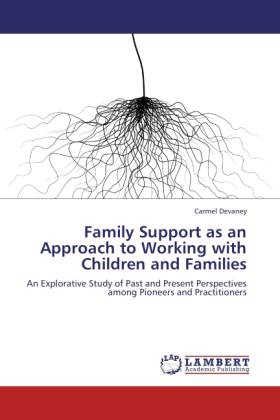
Family Support as an Approach to Working with Children and Families
An Explorative Study of Past and Present Perspectives among Pioneers and Practitioners
Carmel Devaney
Paperback | Engels
€ 77,95
+ 155 punten
Omschrijving
In Ireland, the value and merit of Family Support as an approach to working with children is debated and contested. From a policy and practice perspective, Family Support is at times recognised and applauded as a worthwhile orientation in addressing difficulties in children s lives or conversely demeaned or ignored. As Family Support is a relatively new orientation in children s services there has been little consideration as to the factors which have shaped and informed its growth. A lack of clarity and vagueness remains in policy and practice terms as to what Family Support is. Furthermore, a purposely designed postgraduate education programme in Family Support Studies delivered by the Child and Family Research Centre, at the School of Political Science and Sociology, National University of Ireland, Galway has not been evaluated in terms of its influence on participating students. This study reviewed the growth of Family Support as an approach to working with children and families in Ireland, and considered current perspectives on practice, including the influence of academic learning attained through specialised postgraduate education in the area.
Specificaties
Betrokkenen
- Auteur(s):
- Uitgeverij:
Inhoud
- Aantal bladzijden:
- 368
- Taal:
- Engels
Eigenschappen
- Productcode (EAN):
- 9783847300984
- Verschijningsdatum:
- 1/12/2011
- Uitvoering:
- Paperback
- Afmetingen:
- 150 mm x 220 mm
- Gewicht:
- 504 g


Alleen bij Standaard Boekhandel
+ 155 punten op je klantenkaart van Standaard Boekhandel
CADEAU

AANGERADEN


Beoordelingen
We publiceren alleen reviews die voldoen aan de voorwaarden voor reviews. Bekijk onze voorwaarden voor reviews.