


- Afhalen na 1 uur in een winkel met voorraad
- Gratis thuislevering in België vanaf € 30
- Ruim aanbod met 7 miljoen producten
- Afhalen na 1 uur in een winkel met voorraad
- Gratis thuislevering in België vanaf € 30
- Ruim aanbod met 7 miljoen producten





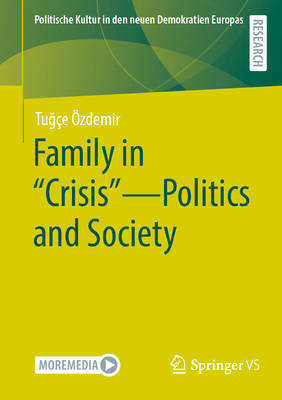
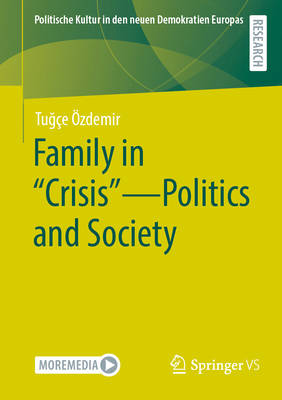
Family in Crisis - Politics and Society
Tuğçe Özdemir
€ 92,45
+ 184 punten
Omschrijving
Drawing upon family and individual interviews conducted in six major cities in Turkey, this study examines the family as a social field through Pierre Bourdieu's theoretical framework, with a particular focus on his concepts of doxa (taken-for-granted assumptions) and illusio (belief in the game). By investigating the interplay between governmental policies, ideological discourses, and familial experiences, this research seeks to illuminate the centrality of the family as a site of governance, cultural negotiation, and generational transformation. This book adopts a multidimensional approach, beginning with a theoretical and methodological foundation, followed by an exploration of historical and political government-family relations from the Tanzimat period to the present. It also presents original fieldwork findings, with a particular focus on the AK Party era, characterized by the intersections of populism, neoliberalism, and neoconservatism. Within this framework, the research explores how the concept of family has been reframed by shifting ideological currents and policy strategies, demonstrating how the family remains a critical locus of political and cultural contestation. The study reveals a stark contrast between generational perspectives on family, with older members maintaining a relatively stable and coherent discourse.
Specificaties
Betrokkenen
- Auteur(s):
- Uitgeverij:
Inhoud
- Aantal bladzijden:
- 297
- Taal:
- Engels
- Reeks:
Eigenschappen
- Productcode (EAN):
- 9783658502799
- Verschijningsdatum:
- 3/01/2026
- Uitvoering:
- Paperback
- Formaat:
- Trade paperback (VS)
- Afmetingen:
- 154 mm x 211 mm
- Gewicht:
- 408 g


Alleen bij Standaard Boekhandel
+ 184 punten op je klantenkaart van Standaard Boekhandel
Cadeau

AANGERADEN


Beoordelingen
We publiceren alleen reviews die voldoen aan de voorwaarden voor reviews. Bekijk onze voorwaarden voor reviews.