


- Afhalen na 1 uur in een winkel met voorraad
- Gratis thuislevering in België vanaf € 30
- Ruim aanbod met 7 miljoen producten
- Afhalen na 1 uur in een winkel met voorraad
- Gratis thuislevering in België vanaf € 30
- Ruim aanbod met 7 miljoen producten





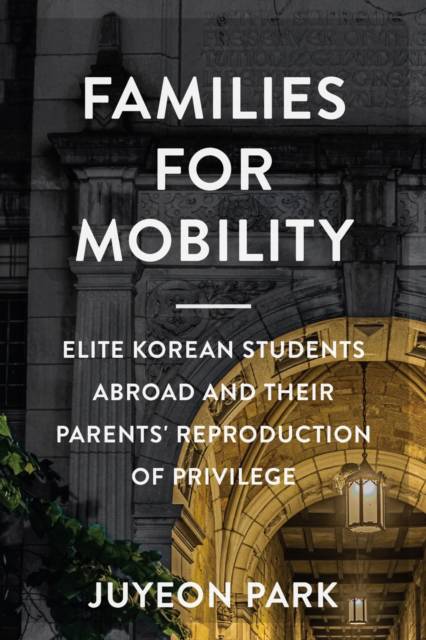
Families for Mobility
Elite Korean Students Abroad and Their Parents' Reproduction of Privilege
Juyeon Park
€ 193,45
+ 386 punten
Uitvoering
Omschrijving
Families for Mobility documents elite Korean transnational families, focusing on how they use elite education abroad as a tool for class reproduction. Drawing on over 100 interviews with both parents and children at elite U.S. colleges, the book explores the desires, aspirations, and expectations that shape these education-driven transnational family arrangements. By triangulating the perspectives of children, mothers, and fathers, Families for Mobility argues that gendered transnational parenting--by both mothers and fathers--plays a crucial role in the intergenerational transmission of mobility and cosmopolitan lifestyles. The analysis shows how class and gender shape both parents' and children's approaches to their transnational 'family projects, ' with fathers and sons appearing more resourceful and ambitious than mothers and daughters, reflecting the gender achievement gap even among the elite. The book challenges stereotypes of Asian high achievers and 'tiger' parenting, providing a more nuanced understanding of who thrives in the hierarchical realms of global education and business, as well as the familial support systems behind their success.
Specificaties
Betrokkenen
- Auteur(s):
- Uitgeverij:
Inhoud
- Aantal bladzijden:
- 226
- Taal:
- Engels
- Reeks:
Eigenschappen
- Productcode (EAN):
- 9781978832664
- Verschijningsdatum:
- 9/09/2025
- Uitvoering:
- Hardcover
- Formaat:
- Genaaid
- Afmetingen:
- 161 mm x 231 mm
- Gewicht:
- 458 g



Alleen bij Standaard Boekhandel
+ 386 punten op je klantenkaart van Standaard Boekhandel
Cadeau

AANGERADEN


Beoordelingen
We publiceren alleen reviews die voldoen aan de voorwaarden voor reviews. Bekijk onze voorwaarden voor reviews.