



- Afhalen na 1 uur in een winkel met voorraad
- In januari gratis thuislevering in België
- Ruim aanbod met 7 miljoen producten
- Afhalen na 1 uur in een winkel met voorraad
- In januari gratis thuislevering in België
- Ruim aanbod met 7 miljoen producten





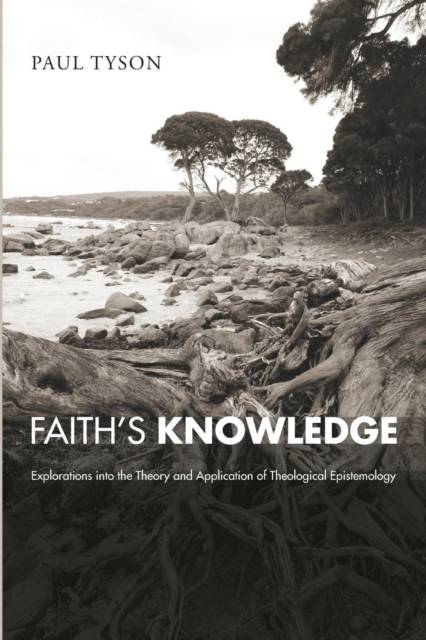
Faith's Knowledge
Explorations into the Theory and Application of Theological Epistemology
Paul Tyson
Paperback | Engels
€ 46,45
+ 92 punten
Uitvoering
Omschrijving
Can we know truth even though certain proof is unattainable? Can we be known by Truth? Is there a relationship between belief and truth, and if so, what is the nature of that relationship? Do we need to have faith in reason and in real meaning to be able to reason towards truth? These are the sorts of questions this book seeks to address. In Faith's Knowledge, Paul Tyson argues that all knowledge that aims at truth is always the knowledge of faith. If this is the case, then--against our modernist cultural assumptions about knowledge--truth cannot be had by proof. Yet, if this is true, then mere information and simply objective facts do not (for us as knowers) exist. Knowledge is always embedded in belief, and knowledge and belief is always expressed in relationships, histories, narratives, shared meanings, and power. Hence, a theological sociology of knowledge emerges out of these explorations in thinking about knowledge as a function of faith.
Specificaties
Betrokkenen
- Auteur(s):
- Uitgeverij:
Inhoud
- Aantal bladzijden:
- 210
- Taal:
- Engels
Eigenschappen
- Productcode (EAN):
- 9781610978187
- Verschijningsdatum:
- 2/05/2013
- Uitvoering:
- Paperback
- Formaat:
- Trade paperback (VS)
- Afmetingen:
- 152 mm x 226 mm
- Gewicht:
- 294 g


Alleen bij Standaard Boekhandel
+ 92 punten op je klantenkaart van Standaard Boekhandel
Cadeau

AANGERADEN


Beoordelingen
We publiceren alleen reviews die voldoen aan de voorwaarden voor reviews. Bekijk onze voorwaarden voor reviews.