


- Afhalen na 1 uur in een winkel met voorraad
- Gratis thuislevering in België vanaf € 30
- Ruim aanbod met 7 miljoen producten
- Afhalen na 1 uur in een winkel met voorraad
- Gratis thuislevering in België vanaf € 30
- Ruim aanbod met 7 miljoen producten





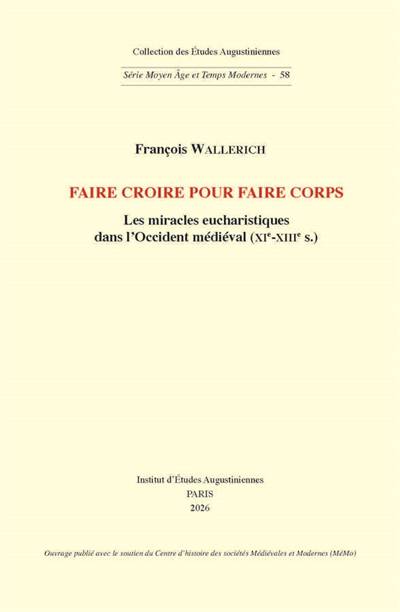
Faire croire pour faire corps
les miracles eucharistiques dans l'Occident médiéval (XIe-XIIIe s.)
François Wallerich
Paperback | Frans
€ 93,44
+ 186 punten
Omschrijving
Collection des études augustiniennes
Série moyen âge et temps modernes 58
François Wallerich, Faire croire pour faire corps. Les miracles eucharistiques dans l'Occident médiéval (XIe-XIIIe s.).
Une hostie saigne entre les mains du prêtre qui l'élève. Le vin prend l'apparence de la poix dans le calice. Un ange soustrait les saintes espèces des mains du célébrant. Comment expliquer la présence en nombre de tels prodiges dans les sources que produit l'Occident médiéval à partir du XIe siècle ? Les miracles eucharistiques, assez rares durant le haut Moyen Âge, connaissent alors un essor indéniable que le présent ouvrage s'efforce de comprendre. Pour ce faire, le livre cherche à articuler les notions de faire croire et de faire corps. Les récits miraculaires sont certes destinés à faire croire : alors que le dogme de la transsubstantiation est peu à peu défini avec précision, et que l'institution ecclésiale doit combattre les hérésies et dissidences qui se multiplient au sujet du sacrement de l'autel, le miracle vient à l'appui d'une pastorale qui vise à normer les croyances et les pratiques des fidèles. Mais il s'agit aussi, et peut-être surtout - telle est ici la thèse défendue -, de faire corps : assurer l'unité de l'Église ; défendre le monopole clérical du sacré ; garantir un ordre social qui entérine la distinction et la supériorité des clercs sur les laïcs.
A host bleeds in the hands of the priest who raises it. The wine takes on the appearance of pitch in the chalice. An angel removes the sacred species from the hands of the celebrant. How can we explain the large number of such miracles in the sources produced by the medieval West from the 11th century onwards ? Eucharistic miracles, which were fairly rare in the early Middle Ages, experienced an undeniable growth at this time, which this book seeks to understand. Accordingly, the book aims to connect the notions of faire croire and faire corps. Miracle stories were certainly intended to make people believe (faire croire) : as the dogma of transubstantiation is gradually defined with precision, and as the ecclesiastical institution must combat heresies and dissidences proliferating, the miracle supports a pastoral effort aimed at regulating the beliefs and practices of the faithful. But it is also, and perhaps above all - this is the thesis defended here - a question of coming together as one body (faire corps) : ensuring the unity of the Church ; defending the clerical monopoly on the sacred ; guaranteeing a social order that confirms the distinction and superiority of clerics over the laity.
Specificaties
Betrokkenen
- Auteur(s):
- Uitgeverij:
Inhoud
- Aantal bladzijden:
- 623
- Taal:
- Frans
Eigenschappen
- Productcode (EAN):
- 9782851213457
- Verschijningsdatum:
- 5/03/2026
- Uitvoering:
- Paperback
- Afmetingen:
- 170 mm x 250 mm


Alleen bij Standaard Boekhandel
+ 186 punten op je klantenkaart van Standaard Boekhandel
Cadeau

AANGERADEN


Beoordelingen
We publiceren alleen reviews die voldoen aan de voorwaarden voor reviews. Bekijk onze voorwaarden voor reviews.