


- Afhalen na 1 uur in een winkel met voorraad
- Gratis thuislevering in België vanaf € 30
- Ruim aanbod met 7 miljoen producten
- Afhalen na 1 uur in een winkel met voorraad
- Gratis thuislevering in België vanaf € 30
- Ruim aanbod met 7 miljoen producten





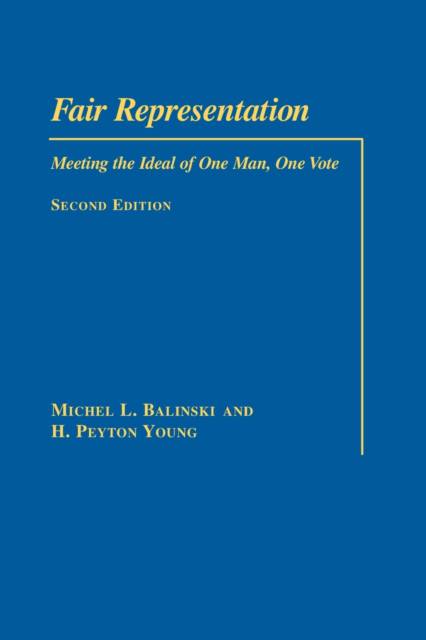
Fair Representation
Meeting the Ideal of One Man, One Vote
Michel L Balinski, H Peyton Young
Paperback | Engels
€ 47,45
+ 94 punten
Omschrijving
The issue of fair representation will take center stage as U.S. congressional districts are reapportioned based on the 2000 Census. Using U.S. history as a guide, the authors develop a theory of fair representation that establishes various principles for translating state populations--or vote totals of parties--into a fair allocation of congressional seats. They conclude that the current apportionment formula cheats the larger states in favor of the smaller, contrary to the intentions of the founding fathers and compromising the Supreme Court's ""one man, one vote"" rulings. Balinski and Young interweave the theoretical development with a rich historical account of controversies over representation, and show how many of these principles grew out of political contests in the course of United States history. The result is a work that is at once history, politics, and popular science. The book--updated with data from the 1980 and 1990 Census counts--vividly demonstrates that apportionment deals with the very substance of political power.
Specificaties
Betrokkenen
- Auteur(s):
- Uitgeverij:
Inhoud
- Aantal bladzijden:
- 192
- Taal:
- Engels
Eigenschappen
- Productcode (EAN):
- 9780815701118
- Verschijningsdatum:
- 1/09/2001
- Uitvoering:
- Paperback
- Formaat:
- Trade paperback (VS)
- Afmetingen:
- 155 mm x 230 mm
- Gewicht:
- 312 g


Alleen bij Standaard Boekhandel
+ 94 punten op je klantenkaart van Standaard Boekhandel
Cadeau

AANGERADEN


Beoordelingen
We publiceren alleen reviews die voldoen aan de voorwaarden voor reviews. Bekijk onze voorwaarden voor reviews.