


- Afhalen na 1 uur in een winkel met voorraad
- Gratis thuislevering in België vanaf € 30
- Ruim aanbod met 7 miljoen producten
- Afhalen na 1 uur in een winkel met voorraad
- Gratis thuislevering in België vanaf € 30
- Ruim aanbod met 7 miljoen producten





Omschrijving
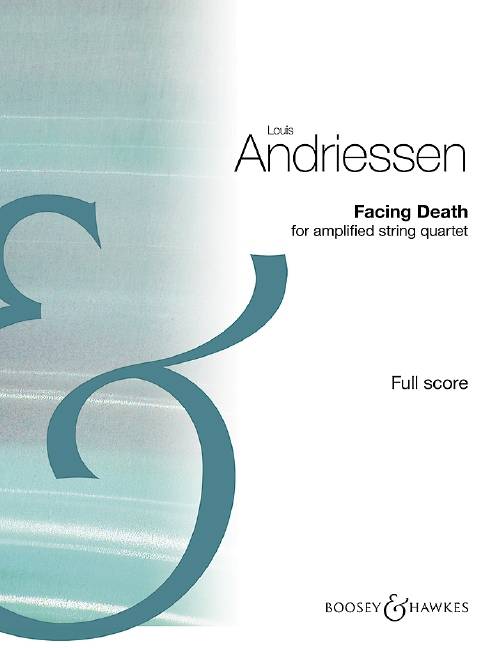
(Boosey & Hawkes Scores/Books). In 1989 when Louis Andriessen was teaching at the State University of New York at Buffalo, Miles Davis's autobiography was published. While reading it, he suddenly knew what the subject of his piece for the Kronos Quartet should be - early be-bop licks and especially the work of Charlie Parker. He wanted to do the impossible - be-bop is not at all idiomatic for string instruments. But be-bop had been an important influence on his musical development when he was young, and he decided to do something with this music from his youth. Basically the essence of Charlie Parker's playing is the extremely fast tempo. This fast tempo is really fast, because the playing is based upon the chord structure of existing melodies which are sometimes played two or three times as fast as normal. Parker needed speed to express what he musically felt: little time was left for him. This is the main explanation of the title of the work.In the beginning of Facing Death, Andriessen literally quotes fragments of Charlie Parker improvisations. He also quotes one original melody: Ornithology (which is based on How High the Moon). The 7th and 8th bars of Ornithology become an important motif in the piece. The whole composition is one long development in Parker's fast tempo. This work was composed in 1990 for string quartet and later arranged for saxophone quartet.
Specificaties
Betrokkenen
- Uitgeverij:
Inhoud
- Aantal bladzijden:
- 48
- Taal:
- Engels
Eigenschappen
- Productcode (EAN):
- 9781784541293
- Verschijningsdatum:
- 1/07/2019
- Uitvoering:
- Paperback
- Formaat:
- Trade paperback (VS)
- Afmetingen:
- 229 mm x 305 mm
- Gewicht:
- 185 g

Alleen bij Standaard Boekhandel
+ 138 punten op je klantenkaart van Standaard Boekhandel
Wedstrijd


Beoordelingen
We publiceren alleen reviews die voldoen aan de voorwaarden voor reviews. Bekijk onze voorwaarden voor reviews.