


- Afhalen na 1 uur in een winkel met voorraad
- Gratis thuislevering in België vanaf € 30
- Ruim aanbod met 7 miljoen producten
- Afhalen na 1 uur in een winkel met voorraad
- Gratis thuislevering in België vanaf € 30
- Ruim aanbod met 7 miljoen producten





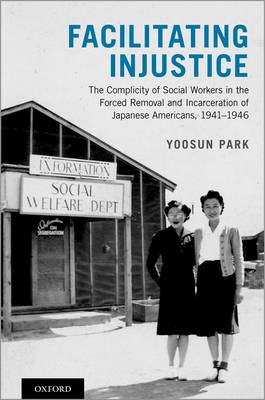
Facilitating Injustice
The Complicity of Social Workers in the Forced Removal and Incarceration of Japanese Americans, 1941-1946
Yoosun Park
Hardcover | Engels
€ 130,95
+ 261 punten
Omschrijving
On February 19, 1942, President Franklin Roosevelt issued Executive Order 9066-the primary action that propelled the removal and incarceration of Japanese Americans. From the last days of that month, when California's Terminal Island became the first site of forced removal, to March of 1946,
when the last of the War Relocation Authority concentration camps was finally closed, the federal government incarcerated approximately 120,000 persons of Japanese ancestry. Social workers were integral cogs in this federal program of forced removal and incarceration: they vetted, registered,
counseled, and tagged all affected individuals; staffed social work departments within the concentration camps; and worked in the offices administering the resettlement, the planned scattering of the population explicitly intended to prevent regional re-concentration. In its unwillingness to
take a resolute stand against the removal and incarceration and carrying out its government-assigned tasks, social work enacted and thus legitimized the bigoted policies of racial profiling en masse. Facilitating Injustice reconstructs this forgotten disciplinary history to highlight an enduring
tension in the field-the conflict between its purported value-base promoting pluralism and social justice and its professional functions enabling injustice and actualizing social biases. Highlighting the urgency to examine the profession's current approaches, practices, and policies within today's
troubled nation, this text serves as a useful resource for students and scholars of immigration, ethnic studies, internment studies, U.S. history, American studies, and social welfare policy/history.
when the last of the War Relocation Authority concentration camps was finally closed, the federal government incarcerated approximately 120,000 persons of Japanese ancestry. Social workers were integral cogs in this federal program of forced removal and incarceration: they vetted, registered,
counseled, and tagged all affected individuals; staffed social work departments within the concentration camps; and worked in the offices administering the resettlement, the planned scattering of the population explicitly intended to prevent regional re-concentration. In its unwillingness to
take a resolute stand against the removal and incarceration and carrying out its government-assigned tasks, social work enacted and thus legitimized the bigoted policies of racial profiling en masse. Facilitating Injustice reconstructs this forgotten disciplinary history to highlight an enduring
tension in the field-the conflict between its purported value-base promoting pluralism and social justice and its professional functions enabling injustice and actualizing social biases. Highlighting the urgency to examine the profession's current approaches, practices, and policies within today's
troubled nation, this text serves as a useful resource for students and scholars of immigration, ethnic studies, internment studies, U.S. history, American studies, and social welfare policy/history.
Specificaties
Betrokkenen
- Auteur(s):
- Uitgeverij:
Inhoud
- Aantal bladzijden:
- 474
- Taal:
- Engels
Eigenschappen
- Productcode (EAN):
- 9780199765058
- Verschijningsdatum:
- 19/11/2019
- Uitvoering:
- Hardcover
- Formaat:
- Genaaid
- Afmetingen:
- 160 mm x 236 mm
- Gewicht:
- 816 g


Alleen bij Standaard Boekhandel
+ 261 punten op je klantenkaart van Standaard Boekhandel
Cadeau

AANGERADEN


Beoordelingen
We publiceren alleen reviews die voldoen aan de voorwaarden voor reviews. Bekijk onze voorwaarden voor reviews.