



Je cadeautjes zeker op tijd in huis hebben voor de feestdagen? Kom langs in onze winkels en vind het perfecte geschenk!
- Afhalen na 1 uur in een winkel met voorraad
- Gratis thuislevering in België vanaf € 30
- Ruim aanbod met 7 miljoen producten
Je cadeautjes zeker op tijd in huis hebben voor de feestdagen? Kom langs in onze winkels en vind het perfecte geschenk!
- Afhalen na 1 uur in een winkel met voorraad
- Gratis thuislevering in België vanaf € 30
- Ruim aanbod met 7 miljoen producten





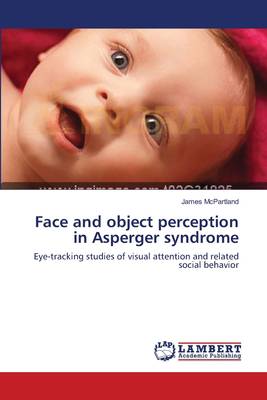
Face and object perception in Asperger syndrome
Eye-tracking studies of visual attention and related social behavior
James McPartland
Paperback | Engels
€ 87,45
+ 174 punten
Omschrijving
This text examines visual attention during face and object perception in adolescents with Asperger syndrome. Point of gaze was recorded while participants viewed upright and inverted human faces, monkey faces, three-dimensional shapes, and two-dimensional patterns under passive viewing, encoding, and recognition conditions. Neuropsychological and social-emotional assessments were administered and related to measures of visual attention. Like typically developing counterparts, children with Asperger syndrome preferentially attended to eyes irrespective of viewing condition. Both groups of children displayed similar face recognition ability, and extended viewing of the eyes was associated with lower face recognition scores. Among individuals with Asperger syndrome, increased attention to the eyes was associated with improved gender discrimination, and face recognition skill was associated with social adaptive function. These results suggest that face processing impairments are not evident in all contexts in individuals with Asperger syndrome. Social interest, stimulus properties, processing strategy, and intervention history may influence face perception in autism spectrum disorder.
Specificaties
Betrokkenen
- Auteur(s):
- Uitgeverij:
Inhoud
- Aantal bladzijden:
- 140
- Taal:
- Engels
Eigenschappen
- Productcode (EAN):
- 9783838312262
- Verschijningsdatum:
- 21/05/2010
- Uitvoering:
- Paperback
- Afmetingen:
- 150 mm x 220 mm
- Gewicht:
- 203 g


Alleen bij Standaard Boekhandel
+ 174 punten op je klantenkaart van Standaard Boekhandel
CADEAU


Beoordelingen
We publiceren alleen reviews die voldoen aan de voorwaarden voor reviews. Bekijk onze voorwaarden voor reviews.