


- Afhalen na 1 uur in een winkel met voorraad
- Gratis thuislevering in België vanaf € 30
- Ruim aanbod met 7 miljoen producten
- Afhalen na 1 uur in een winkel met voorraad
- Gratis thuislevering in België vanaf € 30
- Ruim aanbod met 7 miljoen producten





Omschrijving
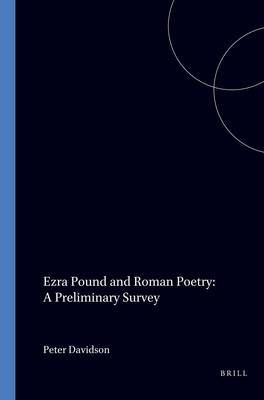
Ezra Pound and Roman Poetry is an examination of a crucial phase in the development of Pound as translator and, therefore, of creative translation in the twentieth century. The book provides a survey of Pound's attempt to appropriate the poetry of Classical Rome, by tracing the histories of the poet's involvement with Horace, Virgil, Catullus, Ovid and Propertius, in order to express his own marginal position within London during the First World War. No extensive critical discussion is attempted, but attention is given to Pound's critical writings on the Latin poets as well as his translations from their work. Dr Davidson also treats other aspects of Pound's problematic relation to the Classical Tradition: the use and abuse of dictionaries; Laforgue and Baudelaire as a third term haunting Pound's translations; the difficult monolith of English classicism; the invention of an oppositional romanitas. It is hoped that this work may encourage others to produce the comprehensive survey which Pound's sustained and Protean relationship to the classical languages would appear to demand. Pound's readings of Latin poetry are inevitably readings also of English poetry, in the context of England, and particularly London, in the first two decades of the twentieth century.
Specificaties
Betrokkenen
- Auteur(s):
- Uitgeverij:
Inhoud
- Aantal bladzijden:
- 188
- Taal:
- Engels
- Reeks:
- Reeksnummer:
- nr. 4
Eigenschappen
- Productcode (EAN):
- 9789051838749
- Verschijningsdatum:
- 1/01/1995
- Uitvoering:
- Paperback
- Formaat:
- Trade paperback (VS)
- Afmetingen:
- 150 mm x 220 mm


Alleen bij Standaard Boekhandel
+ 160 punten op je klantenkaart van Standaard Boekhandel
CADEAU


Beoordelingen
We publiceren alleen reviews die voldoen aan de voorwaarden voor reviews. Bekijk onze voorwaarden voor reviews.