


- Afhalen na 1 uur in een winkel met voorraad
- Gratis thuislevering in België vanaf € 30
- Ruim aanbod met 7 miljoen producten
- Afhalen na 1 uur in een winkel met voorraad
- Gratis thuislevering in België vanaf € 30
- Ruim aanbod met 7 miljoen producten





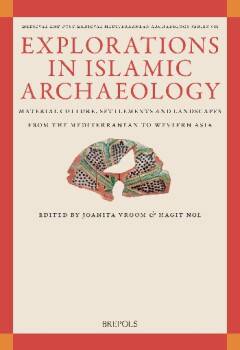
Explorations in Islamic Archaeology
Material Culture, Settlements, and Landscapes from the Mediterranean to Western Asia
Joanita Vroom
€ 84,80
+ 169 punten
Omschrijving
This volume presents contributions by leading scholars on various topics and aspects of Islamic Archaeology, a discipline which has recently seen the development of exciting new approaches to the study of the material culture of the Muslim world. This material culture was produced by and/or for Muslims, as well as by and/or for non-Muslims living under Islamic rule from the 7th century onward, in an expanding and ultimately vast area reaching from southern Europe to West Asia. The contributions in this book focus on Jordan, Oman, Spain, Turkey, Lebanon, as well as Israel, and cover a timespan from the 7th century through the Mamluk period to the early 20th century. They highlight the archaeology of large Islamic centers in the past, but also of the material culture in smaller sites and peripheral regions. Special emphasis is paid to pottery as one of the main artifacts that carry information on past societies, but other finds and materials are discussed as well. The aspect of Islamic material culture which receives particular attention is 'production', specifically the production of clay vessels, glaze, mercury, and crops. What unites the new approaches presented here is that Islam is understood as both a 'religion' and a framework for economic, cultural, and social networks and influence. In this perspective, the volume aims to offer students of Islamic archaeology, historians of Islam and archaeologists of different disciplines a glimpse of the state-of-the-art in current Islamic Archaeology.
Specificaties
Betrokkenen
- Auteur(s):
- Uitgeverij:
Inhoud
- Aantal bladzijden:
- 360
- Taal:
- Engels
- Reeks:
- Reeksnummer:
- nr. 7
Eigenschappen
- Productcode (EAN):
- 9782503618722
- Verschijningsdatum:
- 10/07/2025
- Uitvoering:
- Paperback
- Formaat:
- Trade paperback (VS)
- Afmetingen:
- 151 mm x 277 mm
- Gewicht:
- 966 g


Alleen bij Standaard Boekhandel
+ 169 punten op je klantenkaart van Standaard Boekhandel
Cadeau

AANGERADEN


Beoordelingen
We publiceren alleen reviews die voldoen aan de voorwaarden voor reviews. Bekijk onze voorwaarden voor reviews.