


- Afhalen na 1 uur in een winkel met voorraad
- Gratis thuislevering in België vanaf € 30
- Ruim aanbod met 7 miljoen producten
- Afhalen na 1 uur in een winkel met voorraad
- Gratis thuislevering in België vanaf € 30
- Ruim aanbod met 7 miljoen producten





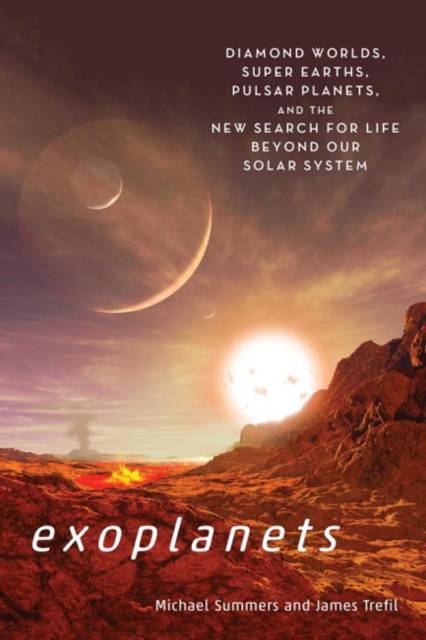
Exoplanets
Diamond Worlds, Super Earths, Pulsar Planets, and the New Search for Life Beyond Our Solar System
Michael Summers, James Trefil
Paperback | Engels
€ 24,95
+ 49 punten
Omschrijving
The past few years have seen an incredible explosion in our knowledge of the universe. Since its 2009 launch, the Kepler satellite has discovered more than two thousand exoplanets, or planets outside our solar system. More exoplanets are being discovered all the time, and even more remarkable than the sheer number of exoplanets is their variety. In Exoplanets, astronomer Michael Summers and physicist James Trefil explore these remarkable recent discoveries: planets revolving around pulsars, planets made of diamond, planets that are mostly water, and numerous rogue planets wandering through the emptiness of space. This captivating book reveals the latest discoveries and argues that the incredible richness and complexity we are finding necessitates a change in our questions and mental paradigms. In short, we have to change how we think about the universe and our place in it, because it is stranger and more interesting than we could have imagined.
Specificaties
Betrokkenen
- Auteur(s):
- Uitgeverij:
Inhoud
- Aantal bladzijden:
- 224
- Taal:
- Engels
Eigenschappen
- Productcode (EAN):
- 9781588346254
- Verschijningsdatum:
- 13/02/2018
- Uitvoering:
- Paperback
- Formaat:
- Trade paperback (VS)
- Afmetingen:
- 152 mm x 226 mm
- Gewicht:
- 317 g


Alleen bij Standaard Boekhandel
+ 49 punten op je klantenkaart van Standaard Boekhandel
Cadeau

AANGERADEN


Beoordelingen
We publiceren alleen reviews die voldoen aan de voorwaarden voor reviews. Bekijk onze voorwaarden voor reviews.