


- Afhalen na 1 uur in een winkel met voorraad
- Gratis thuislevering in België vanaf € 30
- Ruim aanbod met 7 miljoen producten
- Afhalen na 1 uur in een winkel met voorraad
- Gratis thuislevering in België vanaf € 30
- Ruim aanbod met 7 miljoen producten





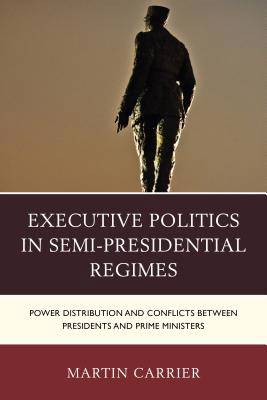
Executive Politics in Semi-Presidential Regimes
Power Distribution and Conflicts Between Presidents and Prime Ministers
Martin Carrier
€ 195,45
Omschrijving
This book analyzes the power variations between political executives in semi-presidential regimes. It contrasts institutional, partisan, and extra-institutional explanations and identifies patterns of change for the power distribution between presidents and prime ministers. It provides an empirical analysis of selected case studies and demonstrates the necessity to understand power variations in a configurative perspective, exposing the limits of institutional design explanations. This study ultimately aims to contribute to both the literature on semi-presidentialism and to the literature on democratic regimes by providing a systematic assessment of these different configurations, in both mature and emerging democracies. To explore this phenomenon, this research tests the key factors of power variation proposed in the semi-presidential literature on the power relationship between presidents and prime ministers mainly in France's Fifth Republic and post-1993 Ukraine, but also to a lesser extent in Finland, post-1993 Russia, and post-1990 Poland.
Specificaties
Betrokkenen
- Auteur(s):
- Uitgeverij:
Inhoud
- Aantal bladzijden:
- 174
- Taal:
- Engels
- Reeks:
Eigenschappen
- Productcode (EAN):
- 9781498510165
- Verschijningsdatum:
- 16/12/2015
- Uitvoering:
- Hardcover
- Formaat:
- Genaaid
- Afmetingen:
- 150 mm x 231 mm
- Gewicht:
- 385 g


Alleen bij Standaard Boekhandel
Cadeau

AANGERADEN


Beoordelingen
We publiceren alleen reviews die voldoen aan de voorwaarden voor reviews. Bekijk onze voorwaarden voor reviews.