


- Afhalen na 1 uur in een winkel met voorraad
- Gratis thuislevering in België vanaf € 30
- Ruim aanbod met 7 miljoen producten
- Afhalen na 1 uur in een winkel met voorraad
- Gratis thuislevering in België vanaf € 30
- Ruim aanbod met 7 miljoen producten





€ 27,45
+ 54 punten
Omschrijving
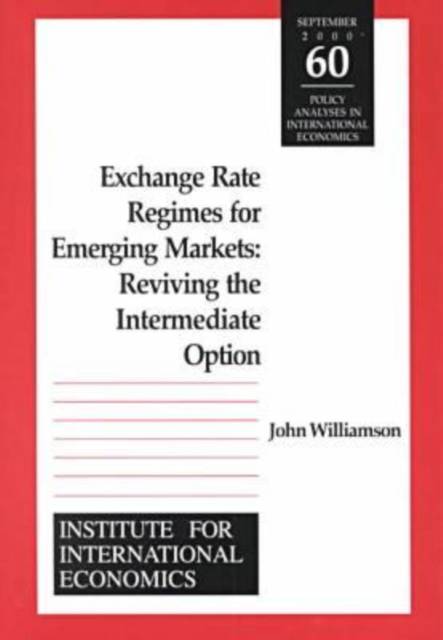
In the aftermath of the Asian/global financial crises of 1997-98, how should emerging markets now structure their exchange rate systems to prevent new crises from occurring? This study challenges current orthodoxy by advocating the revival of intermediate exchange rate regimes. In so doing, Williamson presents a reasoned challenge to the new prevailing attitude which claims that all countries involved in the international capital markets need to polarize to one of the extreme regimes (to a fixed rate with either a currency board or dollarization, or to a lightly-managed float). He concludes that although there is some truth in the allegation that intermediate regimes are vulnerable to speculative crises, they still offer offsetting advantages. He also contends that it would be possible to redesign them to be more flexible so as to reduce their vulnerability to crises.
Specificaties
Betrokkenen
- Auteur(s):
- Uitgeverij:
Inhoud
- Aantal bladzijden:
- 108
- Taal:
- Engels
- Reeks:
- Reeksnummer:
- nr. 60
Eigenschappen
- Productcode (EAN):
- 9780881322934
- Verschijningsdatum:
- 1/09/2000
- Uitvoering:
- Paperback
- Formaat:
- Trade paperback (VS)
- Afmetingen:
- 75 mm x 161 mm
- Gewicht:
- 535 g


Alleen bij Standaard Boekhandel
+ 54 punten op je klantenkaart van Standaard Boekhandel
AANGERADEN


Beoordelingen
We publiceren alleen reviews die voldoen aan de voorwaarden voor reviews. Bekijk onze voorwaarden voor reviews.