


- Afhalen na 1 uur in een winkel met voorraad
- Gratis thuislevering in België vanaf € 30
- Ruim aanbod met 7 miljoen producten
- Afhalen na 1 uur in een winkel met voorraad
- Gratis thuislevering in België vanaf € 30
- Ruim aanbod met 7 miljoen producten





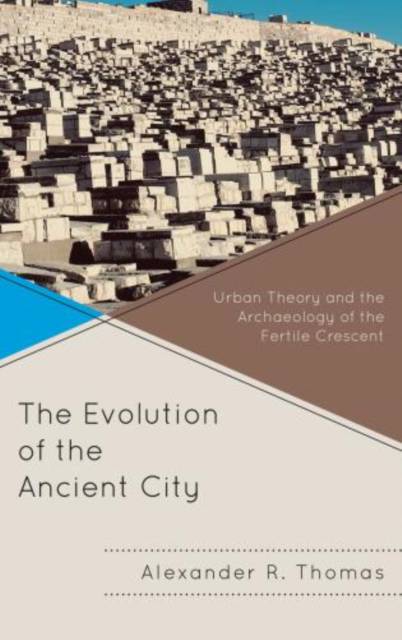
Evolution of the Ancient City
Urban Theory and the Archaeology of the Fertile Crescent
Alexander R Thomas
€ 220,45
+ 440 punten
Uitvoering
Omschrijving
Urban theory and archaeology merge to create a readable discussion of how ancient cities came to be. Although many consider our modern social ills to be the consequence of Capitalism, many urban problems are traceable to pre-Capitalist times and thus are more related to Urbanization. Ancient cities shared many characteristics with modern cities. For instance, the ancient cities of Rome and Carthage at the time of Christ had population densities approaching that of Manhattan Island today. The Canaanites, fifteen hundred years before, lived in cities oriented toward trade and dependent upon mass production of such items as wine, olive oil, and the pottery to contain such goods. Over three thousand years before the Common Era, the city of Uruk was part of a larger "global system" that resembled in its own way the globalization that we know today. Cities first arose in Mesopotamia about 5,500 years ago, but for 5,500 years before the rise of cities the small agricultural village was the most complex form of human social organization-clearly there was nothing inevitable about the city. The Evolution of the Ancient City explores what we can learn of modern cities by tracing the development of ancient cities.
Specificaties
Betrokkenen
- Auteur(s):
- Uitgeverij:
Inhoud
- Aantal bladzijden:
- 232
- Taal:
- Engels
- Reeks:
Eigenschappen
- Productcode (EAN):
- 9780739138694
- Verschijningsdatum:
- 14/09/2010
- Uitvoering:
- Hardcover
- Formaat:
- Ongenaaid / garenloos gebonden
- Afmetingen:
- 162 mm x 235 mm
- Gewicht:
- 517 g


Alleen bij Standaard Boekhandel
+ 440 punten op je klantenkaart van Standaard Boekhandel
Cadeau

AANGERADEN


Beoordelingen
We publiceren alleen reviews die voldoen aan de voorwaarden voor reviews. Bekijk onze voorwaarden voor reviews.