


- Afhalen na 1 uur in een winkel met voorraad
- Gratis thuislevering in België vanaf € 30
- Ruim aanbod met 7 miljoen producten
- Afhalen na 1 uur in een winkel met voorraad
- Gratis thuislevering in België vanaf € 30
- Ruim aanbod met 7 miljoen producten





Omschrijving
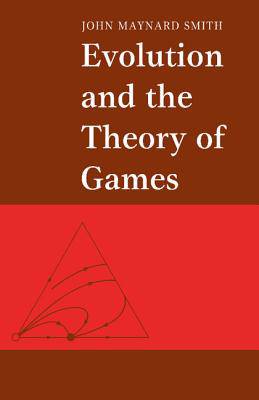
In this 1982 book, the theory of games, first developed to analyse economic behaviour, is modified so that it can be applied to evolving populations. John Maynard Smith's concept of an evolutionarily stable strategy is relevant whenever the best thing for an animal or plant to do depends on what others are doing. The theory leads to testable predictions about the evolution of behaviour, of sex and genetic systems, and of growth and life history patterns. This book contains a full account of the theory, and of the data relevant to it. The account is aimed at senior undergraduate and graduate students, teachers and research workers in animal behaviour, population genetics and evolutionary biology. The book will also be of interest to mathematicians and game theorists; the mathematics has been largely confined to appendixes so that the main text may be easily followed by biologists.
Specificaties
Betrokkenen
- Auteur(s):
- Uitgeverij:
Inhoud
- Aantal bladzijden:
- 234
- Taal:
- Engels
Eigenschappen
- Productcode (EAN):
- 9780521288842
- Verschijningsdatum:
- 21/10/1982
- Uitvoering:
- Paperback
- Formaat:
- Trade paperback (VS)
- Afmetingen:
- 144 mm x 215 mm
- Gewicht:
- 326 g


Alleen bij Standaard Boekhandel
+ 154 punten op je klantenkaart van Standaard Boekhandel

Beoordelingen
We publiceren alleen reviews die voldoen aan de voorwaarden voor reviews. Bekijk onze voorwaarden voor reviews.