


- Afhalen na 1 uur in een winkel met voorraad
- Gratis thuislevering in België vanaf € 30
- Ruim aanbod met 7 miljoen producten
- Afhalen na 1 uur in een winkel met voorraad
- Gratis thuislevering in België vanaf € 30
- Ruim aanbod met 7 miljoen producten





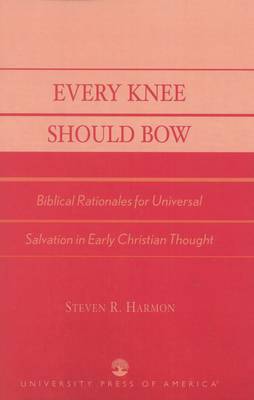
Every Knee Should Bow
Biblical Rationales for Universal Salvation in Early Christian Thought
Steven R Harmon
Paperback | Engels
€ 127,45
+ 254 punten
Omschrijving
In Every Knee Should Bow, Steven Harmon explores the manner in which Clement of Alexandria (ca. 160-215 C.E.), Origen (ca. 185-ca. 251 C.E.), and Gregory of Nyssa (331/340-ca. 395 C.E.) appealed to Scripture in developing rationales for their concepts of apokatastasis, the hope that all rational creatures will ultimately be reconciled to God. Harmon argues that these patristic universalists maintained their hope for "a wideness in God's mercy" primarily because they believed this hope was the most coherent reading of the biblical story. Although Hellenistic thought might also have suggested an eschatology in which the end corresponds to the beginning, the eschatologies of these ancient Christian theologians were shaped mainly by the Hebrew story of creation, fall, redemption, and consummation, read through the lenses of the church's experience of God's saving work in the person of Jesus Christ. These early attempts to take seriously the biblical story's affirmations of the divine intention to save all people on the one hand, and of judgment and hell on the other, have a certain timeless relevance. In a context not unlike that of the late antique Christian world, the postmodern church again wrestles with these tensions in the biblical story in the midst of religious pluralism.
Specificaties
Betrokkenen
- Auteur(s):
- Uitgeverij:
Inhoud
- Aantal bladzijden:
- 180
- Taal:
- Engels
Eigenschappen
- Productcode (EAN):
- 9780761827191
- Verschijningsdatum:
- 17/11/2003
- Uitvoering:
- Paperback
- Formaat:
- Trade paperback (VS)
- Afmetingen:
- 141 mm x 215 mm
- Gewicht:
- 240 g


Alleen bij Standaard Boekhandel
+ 254 punten op je klantenkaart van Standaard Boekhandel
CADEAU

AANGERADEN


Beoordelingen
We publiceren alleen reviews die voldoen aan de voorwaarden voor reviews. Bekijk onze voorwaarden voor reviews.