


- Afhalen na 1 uur in een winkel met voorraad
- Gratis thuislevering in België vanaf € 30
- Ruim aanbod met 7 miljoen producten
- Afhalen na 1 uur in een winkel met voorraad
- Gratis thuislevering in België vanaf € 30
- Ruim aanbod met 7 miljoen producten





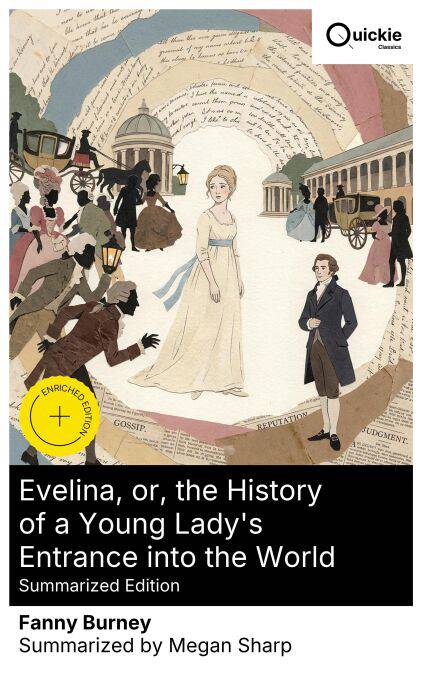
Evelina, or, the History of a Young Lady's Entrance into the World (Summarized Edition) E-BOOK
Enriched edition. An epistolary tale of 18th-century London society, satire, and a young woman's awakening
Fanny Burney
E-book | Engels
€ 0,49
Omschrijving
Published anonymously in 1778, Evelina is an epistolary comedy of manners charting Evelina Anville's perilous debut in London and Bath. Through letters to her guardian, Mr. Villars, she negotiates the vulgar Branghtons, the bullying Captain Mirvan and flamboyant Madame Duval, the predatory Sir Clement Willoughby, and the exemplary Lord Orville. Burney fuses satiric set‑pieces at Vauxhall, Ranelagh, and the opera with tender self‑scrutiny, using a plot of contested parentage to probe reputation, class aspiration, and the optics of female decorum. Positioned between Richardson's moral epistolarity and Smollett's farce, the novel anticipates Austen's social ironies. Frances (Fanny) Burney, daughter of music historian Charles Burney, composed the book amid London's theatres and salons, drawing on a diarist's habit of overhearing talk. Anxious about feminine propriety, she masked authorship, yet mined Richardson's sentiment, Johnsonian conversation, and Smollettian slapstick. Her own fraught path to visibility shapes Evelina's wary, witty education in publicness. Readers of eighteenth‑century fiction, gender history, and the novel of manners will prize Evelina for its vivacity and moral intelligence. It is ideal for students and fans of Austen alike: a brisk, sparkling primer in navigating society without surrendering judgment.
Quickie Classics summarizes timeless works with precision, preserving the author's voice and keeping the prose clear, fast, and readable—distilled, never diluted. Enriched Edition extras: Introduction · Synopsis · Historical Context · Brief Analysis · 4 Reflection Q&As · Editorial Footnotes.
Quickie Classics summarizes timeless works with precision, preserving the author's voice and keeping the prose clear, fast, and readable—distilled, never diluted. Enriched Edition extras: Introduction · Synopsis · Historical Context · Brief Analysis · 4 Reflection Q&As · Editorial Footnotes.
Specificaties
Betrokkenen
- Auteur(s):
- Uitgeverij:
Inhoud
- Aantal bladzijden:
- 142
- Taal:
- Engels
Eigenschappen
- Productcode (EAN):
- 8596547879817
- Verschijningsdatum:
- 9/01/2026
- Uitvoering:
- E-book
- Beveiligd met:
- Digital watermarking
- Formaat:
- ePub


Alleen bij Standaard Boekhandel
Cadeau

AANGERADEN


Beoordelingen
We publiceren alleen reviews die voldoen aan de voorwaarden voor reviews. Bekijk onze voorwaarden voor reviews.